The Hidden Scorecard: How Promotions & Pay Are Really…
transcript
Transcript
The Hidden Scorecard; How Promotions & Pay Are Really Decided
Here to read instead of watch? Click through the headings to a section of the full transcript, or scroll away!
- What is a Talent Appraisal Framework & Why Is It Important (with Stats!)
- Step #1: Assessing Performance in Manager Talent Reviews
- Step #2: Assessing Potential in Manager Talent Reviews
- Step #3: How They Put All This Information Together
- Pro Tips You Can Use During Manager Talent Reviews
- What Are Calibration Meetings & How Do They Work
- Pro Tips You Can Use During the Calibration Meeting Stage
- The Performance Review Process
- Pro Tips You Can Use During the Performance Review
- The “Mysterious Company Process” That Decides Compensation
- Step #1: How Much Money is Actually Available for Raises
- Step #2: What is Your Pay Band
- Step #3: Where Are You In the Pay Band
- Step #4: How Much Money is Your Raise Actually?
- What Happens If You Want to Negotiate Your Raise?
- Pro Tips You Can Use for Comp Decisions
- Key Takeaways: How to Show Off the Right Things at the Right Time
Edited, for length and clarity
Today, I'm going to talk to you about The Hidden Scorecard: How Promotions and Pay Are Really Decided. My name is Simran; I'm the Senior People Business Partner at Klue.
I was a competitive cheerleader and coach for many years, which has shaped how I think about performance and how we build high-performing teams, which is something we're going to be talking about a lot today.
I'm going to start you off with a little bit of a story. I grew up doing gymnastics, really loved it, but I wasn't actually very good at it. And you hit this point in high school, I was around 13, and we were figuring out what's next.
My gymnastic coach at the time also coached competitive cheerleading and she encouraged me to take on this new sport. I thought cheer was kind of silly, but I did decide to leap into it reluctantly because my friends are doing it, which is a classic teenage girl moment.
I'm going through the different motions. I'm not really bought in, not really seeing myself in it. But my coach Kira saw something in me that I didn't see in myself.
It definitely wasn't raw talent, but this potential for growth. She gave me a framework for development, helped me build my skills like little Lego pieces and gave me consistent feedback.
And suddenly I had this intense passion for working towards something. That's when it clicked.
I stopped showing up to different practices and I started controlling what I could. How hard I trained, how hard I trained at home and practiced my routine, watching different YouTube videos on strong teams, as well as how I took feedback.
Seven years later, I worked my way up to the most coveted spot in the routine, the centre front dancer.
I'll never forget that choreography camp where I finally got placed there, a spot I wanted every single choreo camp before. Even one moment in the front is all every cheerleader wants.
It wasn't the talent that got me there, like I said, I was a lanky, awkward cheerleader who worked really hard to look less rigid. But I got there because I finally understood the scorecard my coach was using.
Like I said, I showed up prepared for practices and not just prepared to perform at competitions.
The same thing can be true for us at work. We show up, we do the work, we act on feedback and still get passed over. A lot of the time it's not because we're not good enough, it's because we didn't know how the scorecard actually worked.
Today, I'm going to show you that scorecard. Here's what worked for me in helping me move up in cheerleading. I had a coach who helped me understand the skills, aka the framework for success. She gave me consistent feedback to help me improve.
Most of us do think about career advancement like this, where we need a manager who will see something in us and help us move up. But you don't always have a coach who will recognize your skill.
It wasn't just the coach who made it possible for me to move up. I played a big role in this by taking initiative and taking feedback, the element of just being a sponge and absorbing things coming at me.
I also watched strong performers; those are the YouTube videos I was talking about. I was obsessed with the sport and with the craft and seeing what good looks like and calibrating myself to it.
At the end of the day, both my coach and I worked really hard to make me ready for the next best spot in the routine by implementing that feedback, by looking at that framework over and over until I got there.
I'll teach you how you can control your side of the equation, your part, and how you can be your own best athlete and use the different frameworks and feedback that exist in the work world to help you be in the driver's seat and move up no matter what.
So, we'll take an inside look at the structure companies use to manage performance and promotions and show you how you can leverage them so you can succeed.
What is a Talent Appraisal Framework & Why Is It Important (with Stats!)
One of the main structures companies use is called a Talent Appraisal Framework. Talent frameworks are built to evaluate several different things.
First, we look at performance.
One of the key things they almost measure all the time is impact to the business.
That's your KPIs, objectives and key results, as well as your skill development, like leadership skills or maybe even technical competencies.
Culture and values. That's things like builder mindset for us here at Klue. And this can be optional, certain companies may or may not look at culture and values.
Are you also solving specific business challenges in your role? For us right now, there's this element of being AI forward.
The second element beyond performance is potential. Your readiness to grow into new roles and opportunities.
We use talent appraisal frameworks because they help us understand expectations, just like in cheer, we have a scorecard and we know what a good routine looks like. It'll help you develop your skills.
When you know that scorecard, you know what skills to improve, and you try to maximize max points on that scorecard.
It also allows us to create a system that's fair and consistent. In the same way, a judge uses a scorecard for every team, as well as allowing managers to reward the right behaviours.
Finally, companies can maintain their talent density. The same way our coaches evaluate the way that we scored in a routine and then make adjustments after that to the routine to decide who's in what places.
These appraisals are really important for women, in particular because of the amount of bias that women face in building their careers.
Here are some stats from a Yale study in 2021 that looked at assessment records for over 30,000 workers. They found that women performed better than men.
They were 7.3% more likely to get a high-performance rating, which means that they drove great results in business, got lots of work done, did all the great things.
Even though they performed well, women are 5.8% less likely to get a high potential rating, which means that even though women are outperforming men, their managers were less likely to think they had the potential to do well at the next level up.
Because of this, they found that women are 14% less likely to be promoted at the company each year.
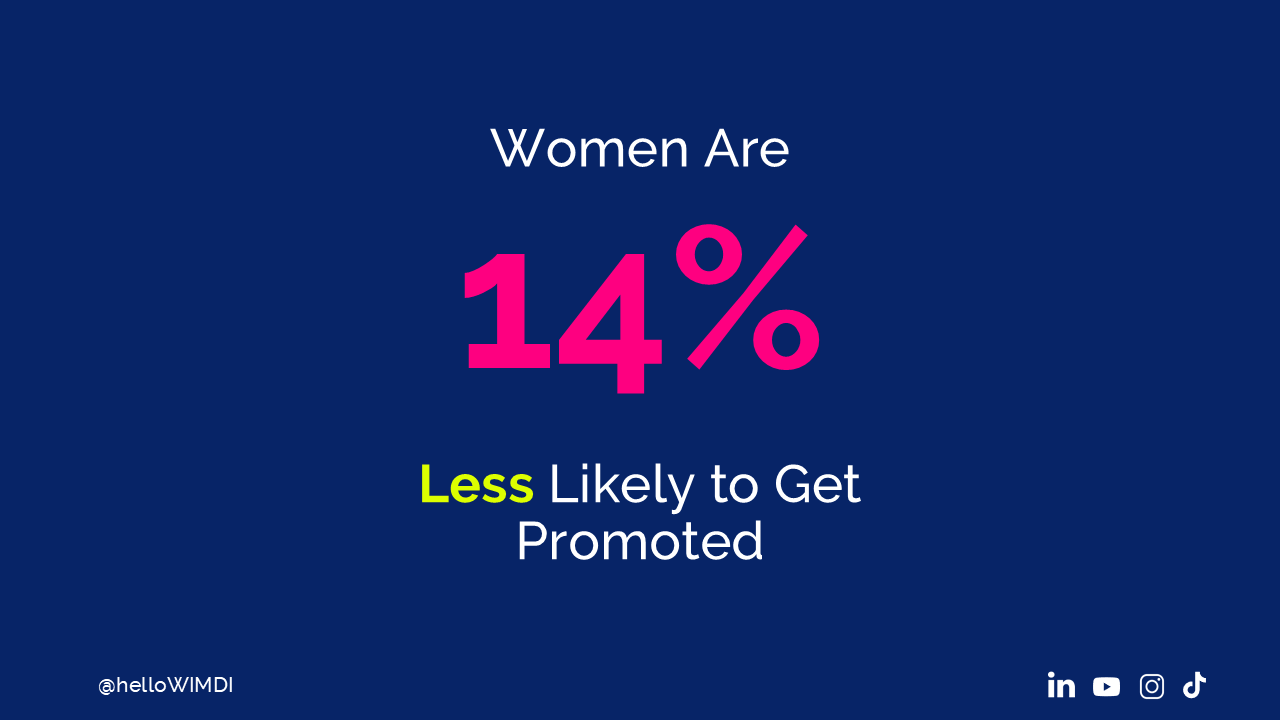
The authors of that study actually estimated that the lower potential rating explained up to 50% of the gap in promotions.
Because of this bias, women are at a disadvantage when it comes to getting promoted, which is why it's important to understand how potential is assessed and how promotion decisions really happen.
Like I said, knowing that scorecard can give you that edge up, at least according to the stats, it's really needed and you need to understand that to be able to move up.
Let's go through what a typical talent appraisal process looks like at most companies.
Yours might look similar to this, might look slightly different, but this will give you a general sense of what that scorecard is, so you can figure out how to use it to your advantage and minimize or erase that 14% promotion gap.
Step #1: Assessing Performance in Manager Talent Reviews
It starts with the manager talent review, which is where your manager sits down and looks at everyone on the team and how they're performing and what their potential is.
It's just your manager doing this, a solo activity, they're collecting their own thoughts about their team. It's your manager's chance to reflect on their team performance and think about the different gaps they want to support.
What that looks like in more detail is;
- they assess your current performance, where they're looking at your technical depth in your role
- how well do you understand the aspects of your job
- your level of expertise
- the specific skills and competencies required to do your role
- your impact on the business, that's the KPIs and OKRs I mentioned earlier
- how well you've been addressing the core business challenges
We often use a rating scale to measure performance. And this is an example of different scales.
There could be linguistic labels that you'll see at the top here, falls below, inconsistent, consistent goes above.
There can be fun emojis or even numerical skills. It can be some of these or it can be a combo or all of them together. They can be less or more detailed. So, you can see here the emojis are three versus the five numerical.
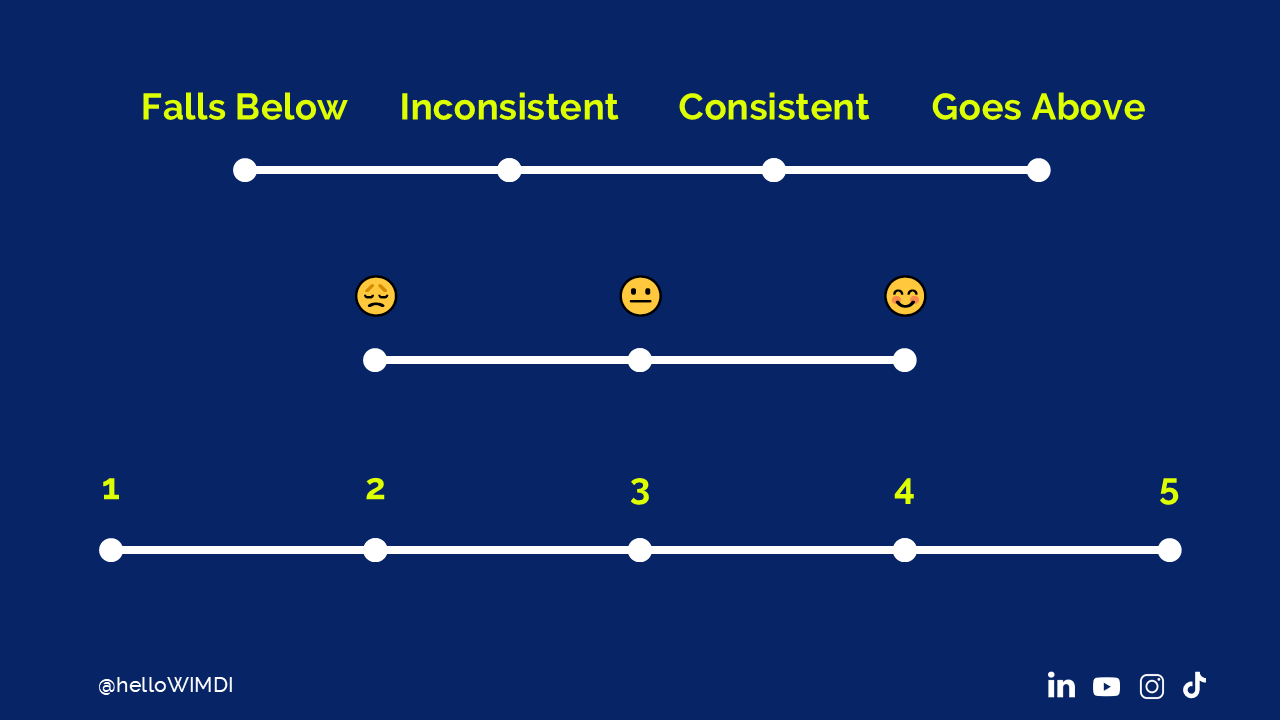
These skills usually do come with a bit of an expectation that most employees will be categorized in the consistent “meets expectation” zone.
Even in cases where a manager thinks they have a really strong team and they love everyone on their team; they can't give everyone the top rating.
There are guidelines around the proportion of how many team members can be in this “above expectations” group.
Step #2: Assessing Potential in Manager Talent Reviews
The second parameter we were talking about earlier is potential. Now this is about growth and using your ability to move into more senior complex roles, projects, or even increased responsibility.
Managers are usually observing your demonstration of your drive and aspiration to grow and make an impact.
- Do you have the ability to take on more complexity?
- When you're given something needy and challenging, do you rise to the occasion?
- How are you showing up?
- Are you a culture contributor?
- Are you an ambassador?
There's a ton of ways to assess potential and we'll go over some of the common ones.
There can be non-systematic ways when you do this that can just be the vibes based where they're just watching what's going on, using their best judgment.
If managers want some more data, they could be back-channelling with your peers which means they're getting folks' opinions on your skills and whether you're ready for the next challenge.
Some more sophisticated companies might be preparing a really detailed promotion packet that lays out all the specifics of how you've completed different projects, the different skill sets, and how you're interacting with others.
Those are some examples of what might go into a promotion packet.
Or they're using a career framework and rating your skills against the career framework to understand where you sit in your career.
We're actually going to take a look at one of those career frameworks so you can see how it works.
This is an example of a blank one. There is a levelling structure at the top, and then there are different parameters down the side.
Each grey square would have a level of detail that shows the progression in each level.
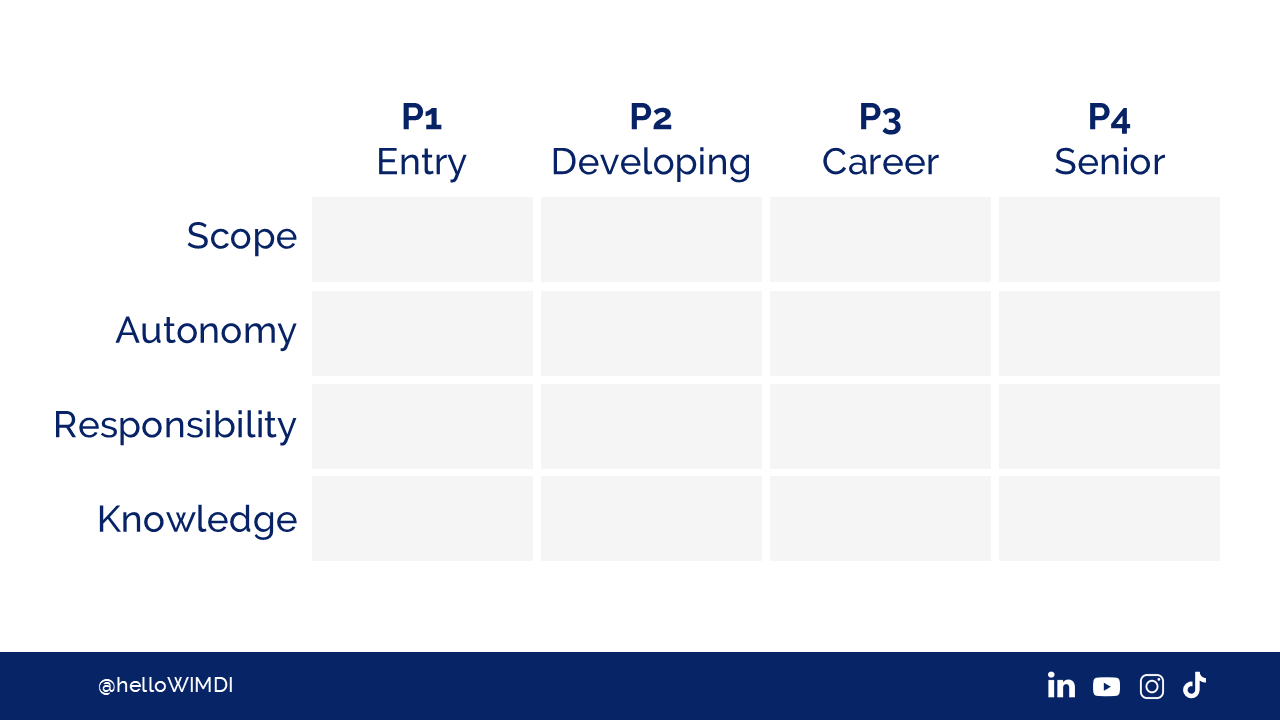
So, if we use scope as an example, you can see here when you're entering your career, you're working on single tasks.
Then as you get into this P2 developing, now you might be working on entire projects. As you move into the P3 career, now you may be managing multiple team projects.
And finally, in a senior, you're looking at the org wide. So, you can see how there's an increase in complexity in the scope.
Managers like to use these kind of frameworks to see where you're sitting as a whole in terms of your career, whether you're ready to move up, and they also use it as a little bit of a map to see what gaps you might have that they can help you close in order for you to move up.
Step #3: How They Put All This Information Together
They've looked at your performance, they've looked at your potential, and so how do they put this all together?
We use this tool called a 9-Box Rating Tool. It can look like a nine-box, it can look like a 16, sometimes even a four or two, but nine is really common.
There are the two axes that we talked about, performance and potential, and then it's divided into three, so low, medium, high, which creates the nine boxes we place folks into.
Then they form these different zones where the red is a combination of lower performance, lower potential, the green is higher performance and higher potential, and the yellow is in the middle.
And the company will decide the different labels they want to have for these boxes.
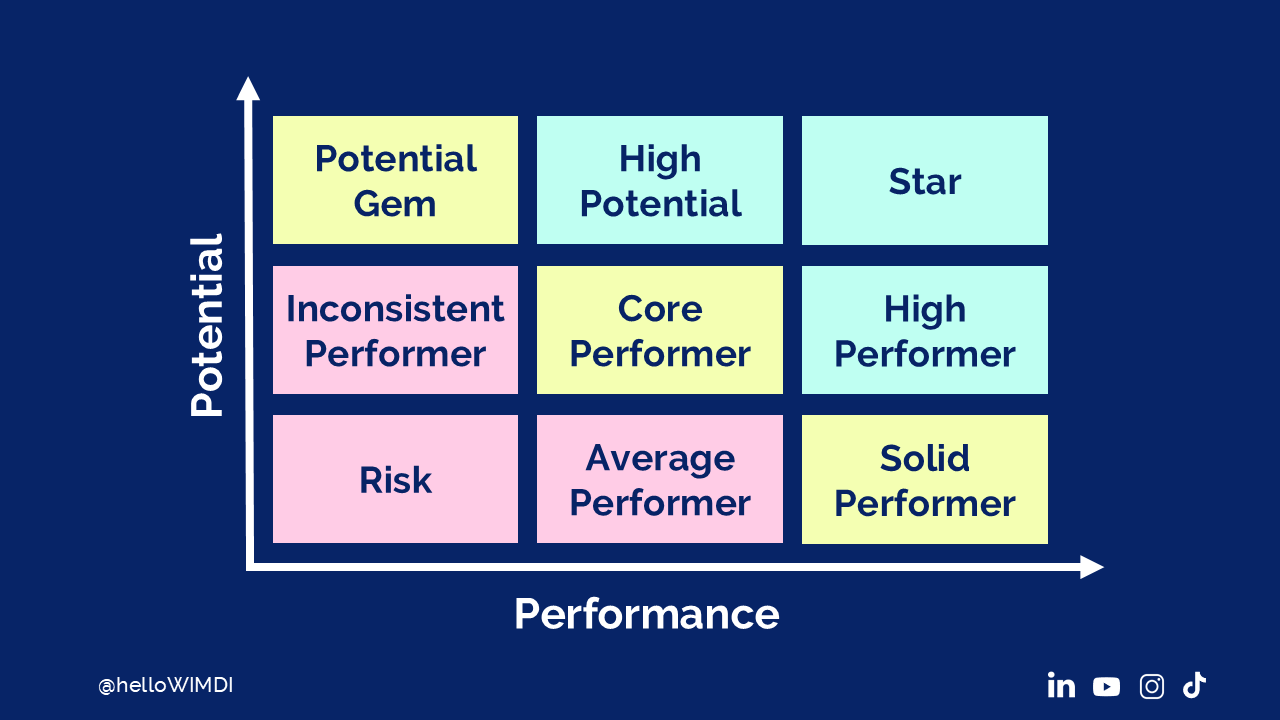
As you can see in the high potential, high performance, we call those our star performers. Whereas our low potential, low performance might be the ones that are at risk.
And then in the middle, which is your consistent, our core performers that are really solid.
It’s actually pretty typical for there to be about 15% in the red, 15% in the green, and most folks to be in that kind of yellow-orange zone.
Now you might be thinking, okay, my manager is taking everything I've done and they're just putting me into a box. We just put people into boxes now.
Despite there being the boxes, talent maps do help drive clarity and help managers see where they need to develop their team skill.
They can diagnose based on the boxes, is someone who's a really high performer that's low or medium potential, where do we need to reignite their motivation and drive?
Or if someone is lower performance, what is it exactly about their performance that we need to give them a little bit of extra help on?
And it's really important from a DE&I perspective. This allows managers to talk about specific examples and evidence, not just a vibes-based approach.
So, we're creating a more explicit rating system that's often better for underrepresented groups.
It also helps managers notice and call out their bias, things like recency bias, extroversion. Now that we're going back to office, proximity bias even, are people that are sitting closer to us being rated better.
Now, before we move on, I want to talk about another common assessment method. I don't love it, but it's often used.
Stack Ranking, which means you're just taking your highest performer to lowest performer and putting them into a list.
This is a useful tool at times when we have larger departments. When we look at this list, we'll think about the folks in the middle zone as they need some more support.
The folks at the end or at the bottom are ones that we are considering performance improvement plans and figuring out how do we improve their performance or figure out a managing out plan.
I do think stack ranking is helpful when it's combined with other assessments and it's another data point, but that's not always how it works.
Sometimes it's used as the only data point where it's a mandate of bottom 20% are put on a PIP and we figure that out. That's why it's not my favourite method.
As companies grow and their processes mature, they do move to something more nuanced like the nine box that we talked about.
In summary, I feel like stack ranking is kind of like the "ultra basic flight fare" for talent appraisals. It does the trick, it gets you to where you're going, but you're not getting that extra leg room or snacks. To me, that's your nine box tool.
So, it's worth knowing since it's still used.
Pro Tips You Can Use During Manager Talent Reviews
Wrapping up the talent review process, just to give you some quick tips, here's how you can use your knowledge of the scorecard to up your score and move to that front spot in the cheer routine.
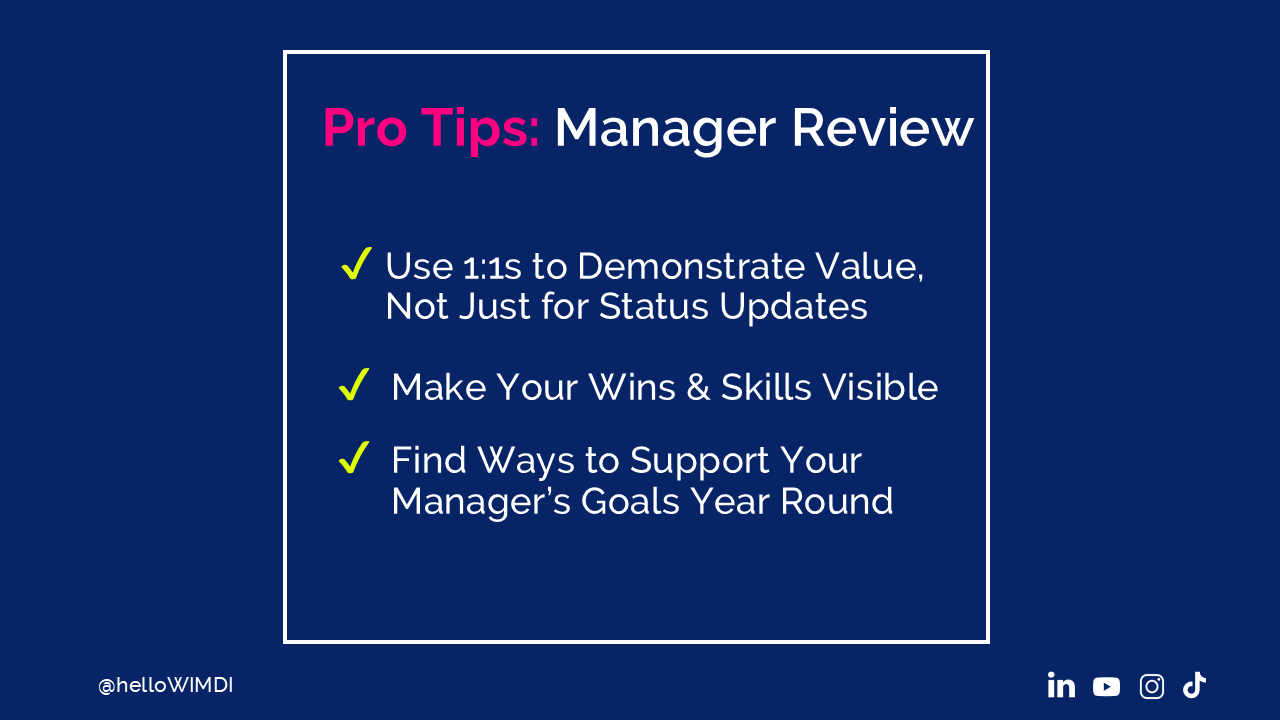
Use your one-on-ones not just as status updates of all to-do list items, use it to demonstrate your value.
How are you impacting your role, the business team, and bring specific examples.
Share your wins, celebrate the great things that you're doing. What are you learning along the way? How are you thinking about things?
Proactively ask for feedback in these moments. This demonstrates your ability to self-reflect, which improves the perception of your potential. Be proactive.
Find ways to be useful that line up with the goals of the business.
Taking it back to cheerleading, my coach Kira wasn't just deciding our spots in the day of choreo.
She was making those decisions at practices, seeing who's committed, who's going the extra mile to improve, who's the athlete that's pushing through or lifting the team up when the energy is low. And your manager's doing the exact same.
Every meeting, every project, every hard day you're pushing through is building your score.
So, our talent review isn't just the moment where they're making these decisions, it's when they're writing it down and evaluations are always on.
What Are Calibration Meetings & How Do They Work
The next step is a calibration meeting. These are meetings to align on what high performance and high potential looks like with other managers or leaders within their departments.
Not all companies do this, it is a bit more of a mature process, but these conversations are still happening even if it's informal.
The people that are usually in these meetings are your own manager, their manager, or sometimes it could be your manager is presenting it to their department head in a one-on-one, for the department head to bring it up to the senior leadership.
How these groups are created are often by functional area.
Calibrations help create clarity on what high potential and high performance looks like.
It also creates consistency and fairness amongst departments and what they're using for these different performance and potential ratings.
It allows managers to be proactive on making team decisions. Who are we growing and developing or who might we need to part ways with?
And it gives managers more insight to how their team is performing through examples from their own peers or their own managers, that they can then share in their performance reviews with their individual team members.
Let's talk about how these meetings actually work. We've seen this talent map, which we pull up in these meetings, where we go through everyone's performance.
We usually spend about 25% of the time in the green zone, 25% of the time in the red, and the meat of the conversation is really in that yellow.
Why is that? It's because it is a lot more obvious with the greens and the reds, and there's just deeper discussion that's needed on the diagnosing element of the yellows.
We'll start with our heck-yes folks, the green zone. What does that conversation look like? That's talking about how these people have stepped up, what gaps they found themselves, how they've been with problems, how they're just getting things done.
These are high executors. What other results have they produced in the KPIs that they've hit?
It's also a gut check moment of what's their ability to work with others, because we also want to make sure that they are being helpful and supportive team members and not the concept of a brilliant jerk.
My advice for you is, how can you make sure you've displayed that you're valuable and hitting these things to the people in this meeting before they get into the room?
And then we move into the red, the manage out.
This is really understanding why someone is not performing or what's happening in terms of the potential of their ability to take more complexity on.
This could be someone in the wrong role, or we have the right person and the right behaviours, but this is not aligned with their strengths and skill sets.
We need to think about maybe a different role in the company, or it could even be the right person but the stage our company is at isn't appropriate for them. We talk about these details and then figure out our plan forward.
Then there's the yellow category. This is getting deeper into development plans for what additional training might they need, what stretch projects, do they need mentoring from senior team members, what's the coaching plan that managers need to follow for X amount of time.
In these calibration meetings, we talk about if there's any discrepancy in ratings, do other managers notice or see things that we need to take into consideration?
If there are discrepancies, we might need to adjust the ratings that managers have included at first.
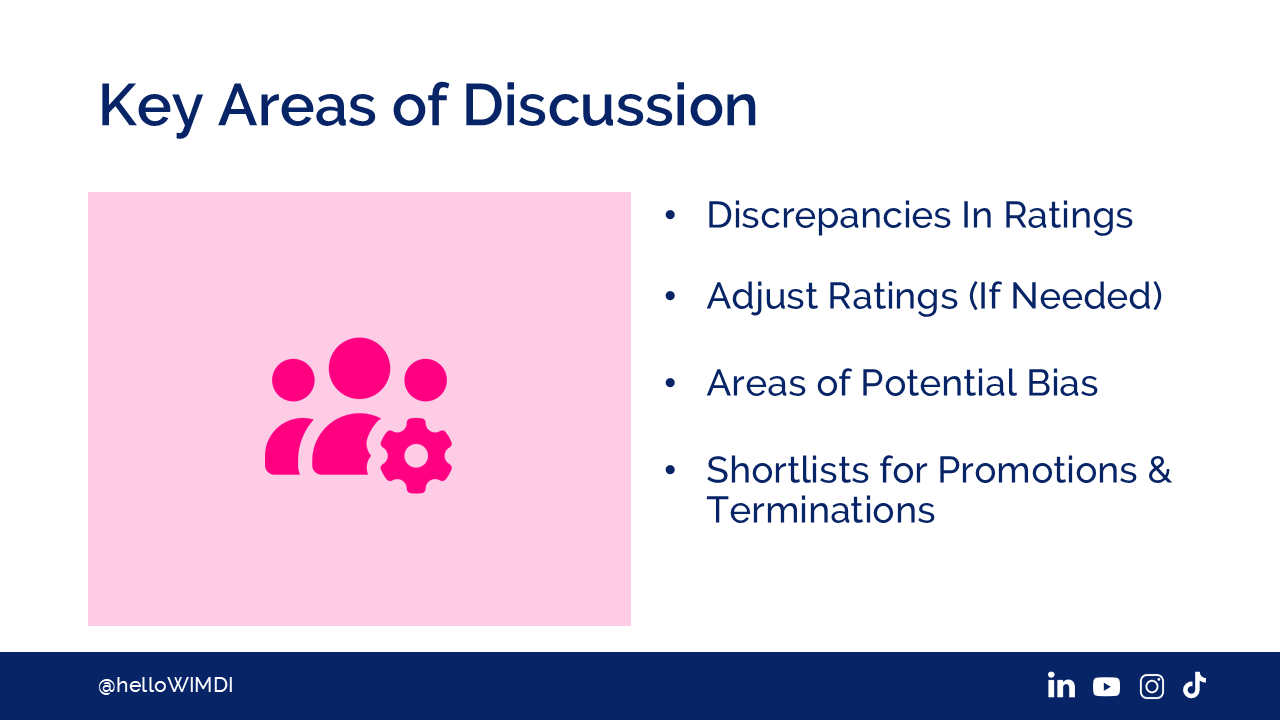
What other blind spots might a manager have? A manager only sees a limited view of a person's performance and what else is happening in different areas that they might not have visibility into.
Then we might leave with a short list of, who are we considering for promotion, and at what time period, or who might we need to part ways with.
Pro Tips You Can Use During the Calibration Meeting Stage
If you want to position yourself for a promotion in this meeting, there's a couple of things you need to do ahead of time.
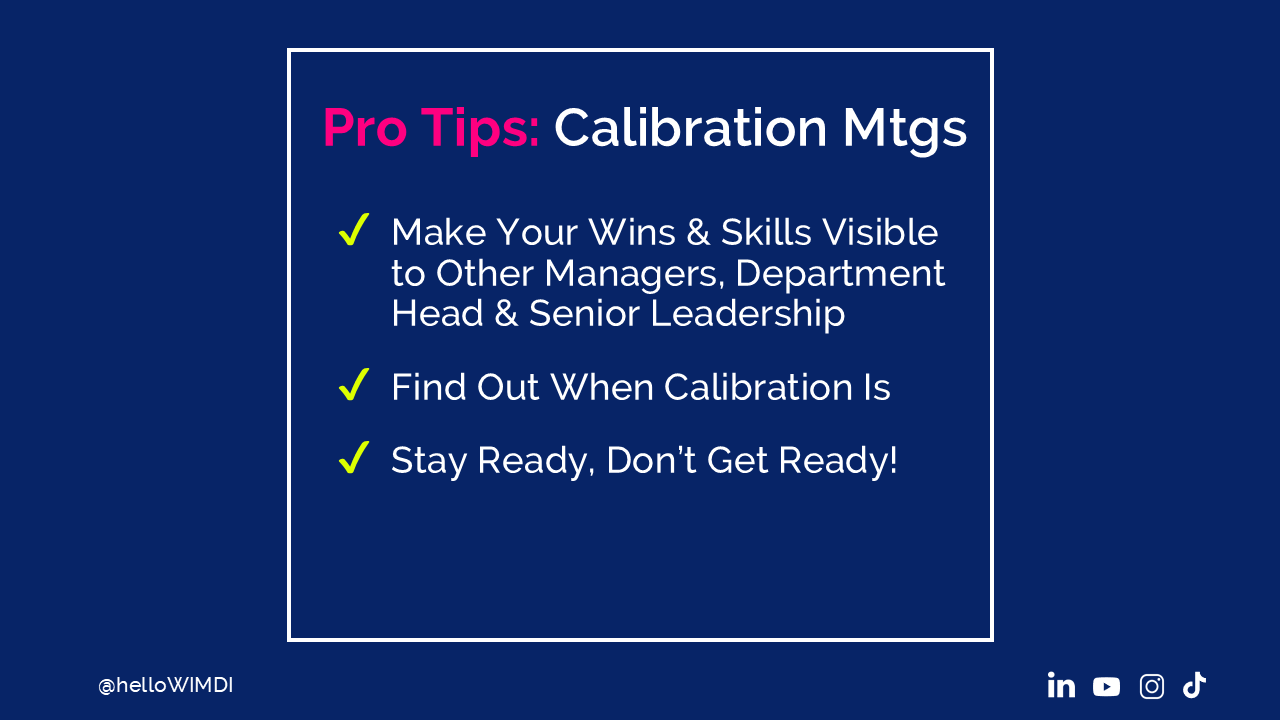
Make your wins and skills visible, not just to your manager, but to other people in the meeting.
How are you finding other leaders and sharing the impact that you're making on the business so that their managers aren't hearing about your accomplishments for the first time in this meeting. You're known and have built this brand with other leaders.
See if you can find out when calibration happens, it's usually way before your performance review. That means if you're using your performance review as a way to share your wins, you're going to miss out.
Think about how you can do this upfront at least a month or so before performance reviews.
You don't have to get ready, if you stay ready. You can do this whole big campaign ahead of a calibration meeting, remind everyone about the great stuff that you did, or you can just make sure that's an always-on approach and you're doing that all year long.
So in cheer, Kira sees me at practice, every practice, but at competition that's when a judging panel that's never watched you train is seeing you for the first time.
To me that judging panel is the calibration meeting. Your manager knows your work, but the others in the room are less familiar.
At work, you don't get to perform in that room. Your manager does it for you. So, the goal is to make sure that you have everything you need so that they can make your case before they ever walk in.
That means making your wins visible not just to your manager, but to the other people who'll be in that room.
The Performance Review Process
A performance review is a formal meeting where you discuss your performance over X period and set goals and development plans for the upcoming one.
This can usually happen yearly, quarterly, semi-annual, your own company will decide on the cadence that works best for them.
It's done one-on-one between you and your manager. It's a moment where you reflect on your performance, take stock of where you are and think about where you want to go and align with your manager.
If you want to move up, this is an opportunity to highlight things to your manager that they need to see, if it hasn't been clear in other conversations, or remind them of your greatest hits so that they can appreciate your overall impact.
I like this moment as well because managers can provide you the clarity on how they're viewing your performance and it's a calibration between the two of you if you were off-track.
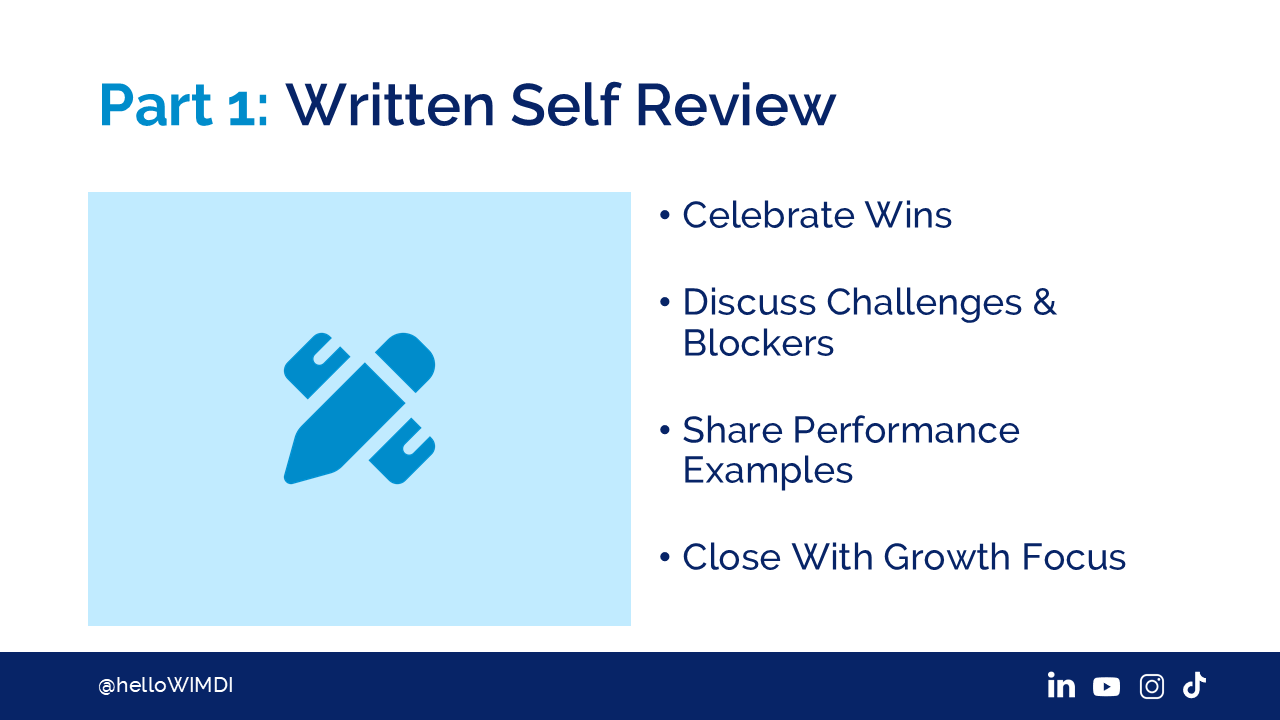
How this works is you start with a written self-review. This is your moment to think about what your wins are, highlight accomplishments you're proud of, discuss what kind of challenges and blockers, what are the things that got in your way or some of your key learnings through those challenges. Again, it’s that self-reflection piece.
Then sharing specific examples that speak to how you actually did.
Closing it off with a growth focus. What is one thing you've identified that you want to develop and how it connects to your role and delivering impact and results.
This is an important one that demonstrates to your manager how you're thinking about the business.
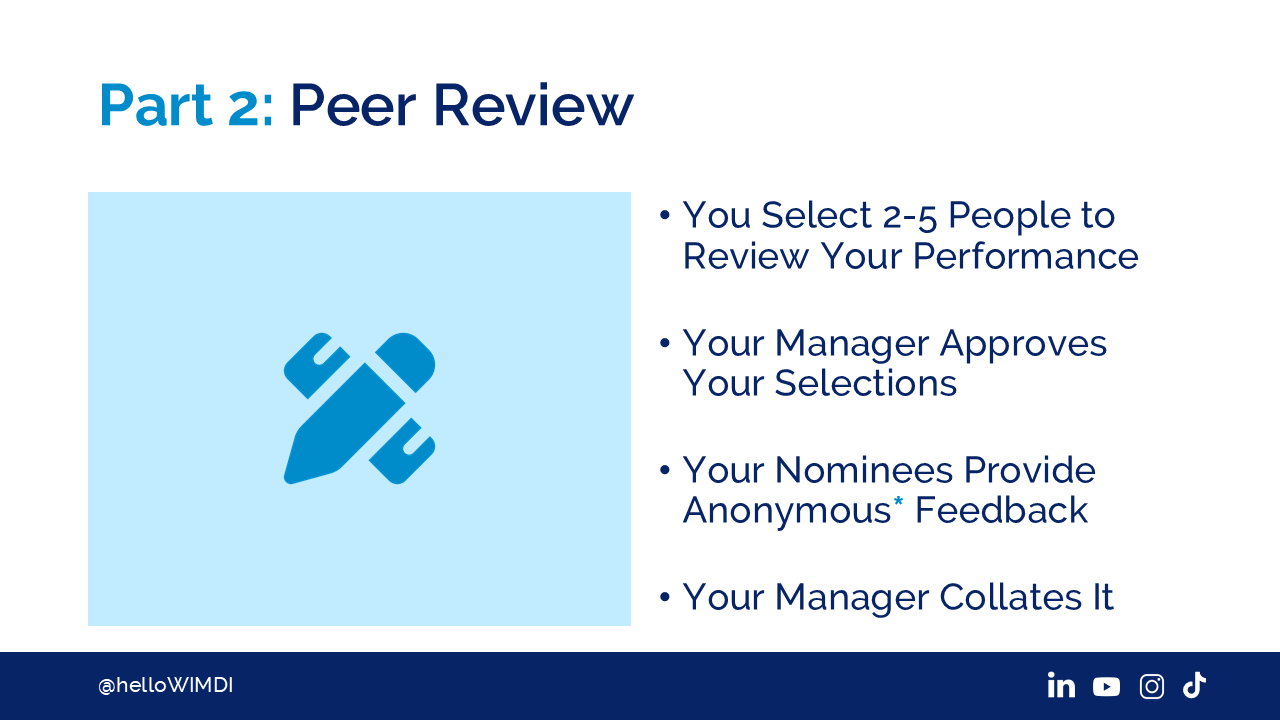
In some companies, you might move on to a peer review period. This is like a 360 where you get an opportunity to select 2 to 5 other people that work with you that will give you a more holistic view on your performance.
It'll illuminate different bright spots, what's working, what friction might you have with peers, and opportunities to lean into how you can create bigger impact.
This is often common in larger companies or even more progressive high-performance companies.
Your manager will approve your selections, so you don't just get to choose your friends that are going to give you a great rating.
Think carefully about the folks that you choose and the ones that really see the work that you do and work with you in different capacities.
It can be anonymous but in many cases it's not. That will be up to your company.
What your manager does, they take that feedback, look at it holistically, they'll prepare some talking points ahead of your performance review, and they'll also share it with you in the next step.
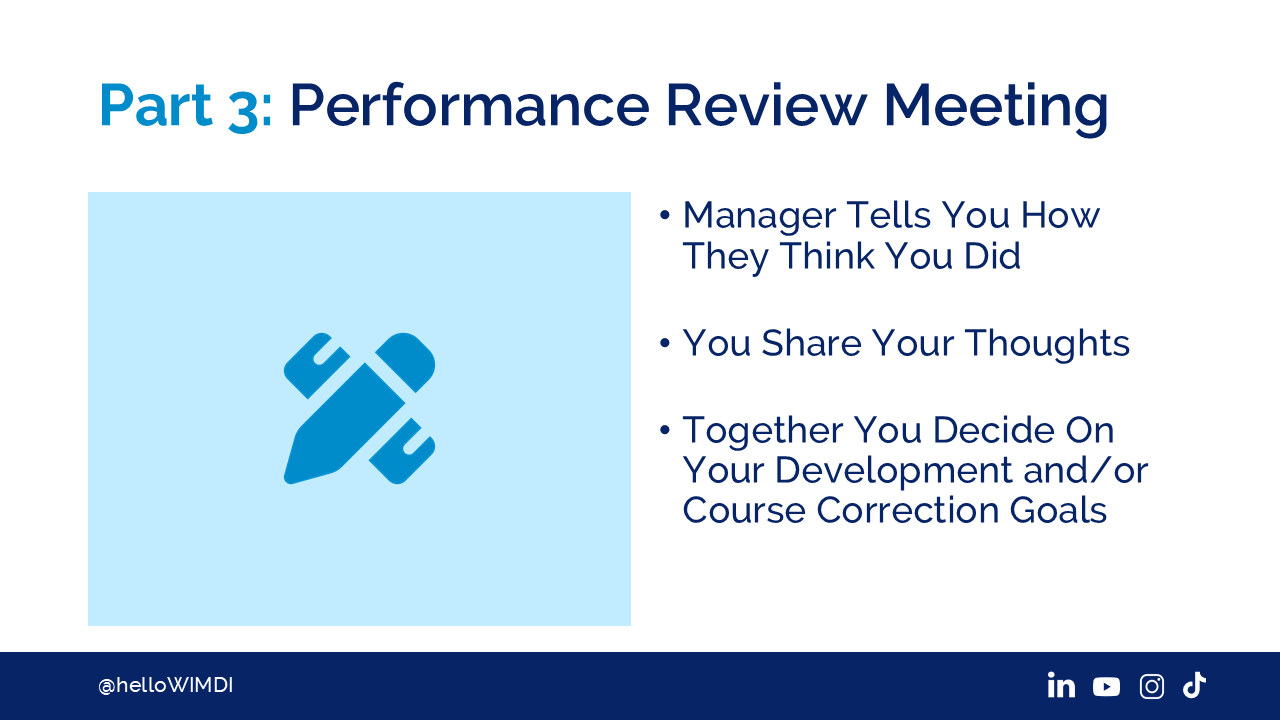
This is the meat of a performance review. It's the actual meeting.
This is a 60-minute joint conversation where you'll discuss how your manager thinks you did and then you share how you think you did.
The main portion of it is deciding on your development and course correction goals. So, where do you need to go to move up or if you are off path how do we get you back on track?
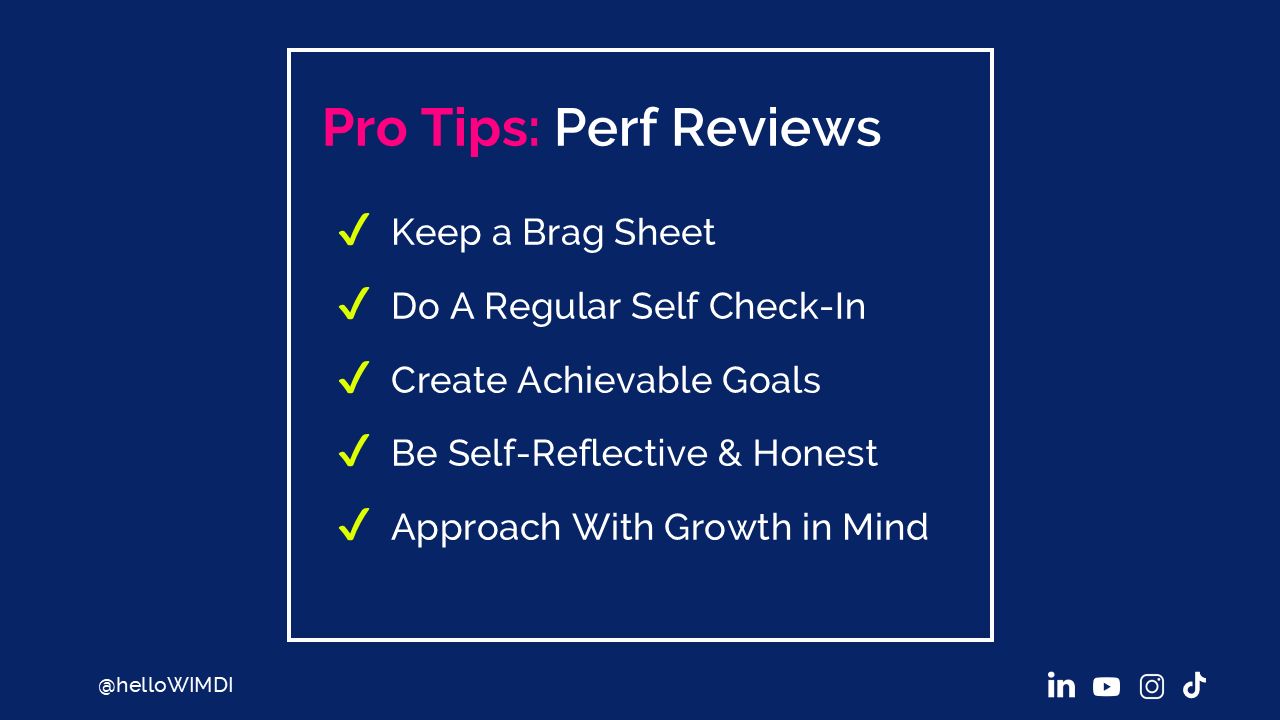
Pro Tips You Can Use During the Performance Review
The pro tips to get the most out of your performance review so you can move up, keep a brag sheet throughout the year. What are the things that you're doing really well?
This will make it easier for you to fill out that performance review. It's also a nice to have as you grow in your career to see all the great things that you're doing and have a little bit of a career scrapbook.
Do a semi-self-check-in. What that means is, take a moment, how are you actually meeting your KPIs? Are you meeting the development goals that you and your manager spoke about?
Do this on your own without it being prompted by your manager asking.
Co-creating achievable goals with your manager so that you can knock them out of the park and be considered that high performer, high potential in the following year.
It's easier to justify a higher performance rating when you're actually achieving what you said.
Be strategic about the goals that you set. Ambitious is great, but achievable and exceeding are the things that actually move you forward.
Share honestly about the things you're struggling with. I know this can feel risky, but being self-reflective shows maturity, which is a high indicator of that high performance, high potential.
When I was cheerleading, I was in a spot as a tumbler. I had to do flips in the routine, but I had a fear around this skill.
I was worried that if I shared this fear with Kira, I would lose my spot after earning it. So, at practices, I kept falling in the routine, or I just wasn't doing the flip.
I finally asked Kira if I could do private lessons with her, so she could break down the skills for me that I struggling to do because I needed to build my confidence.
Through that, I learned that being honest about where you're struggling isn't a red flag. At work, it's one of the strongest signals of potential you can send.
It shows that maturity that you're invested in growing and the fear of losing your spot by admitting you're struggling, I know that's real but staying quiet and falling in the routines is far worse.
Finally, approach this with a growth mindset. This isn't just a checklist where your manager just wants to hear from you. Look at this as a genuine opportunity to improve and grow.
I've noticed the athletes who roll their eyes or made excuses for corrections rarely made it to the front. The ones that moved up and grew in cheerleading were the ones that wanted feedback even when it was hard to hear.
As a cheerleader, I walked into choreo camp knowing I've put everything into it leading up to that moment.
What my coach decided was always going to be her call. But I wasn't walking in just hoping something good was happening. I was walking in ready because I knew exactly what she was looking for.
Your performance review is the same. You can't control what you're rating or what rating your manager lands on, but you know the scorecard, you've been playing into it, and you're walking in ready.
That's the difference between hoping you get noticed and knowing you showed up prepared.
The “Mysterious Company Process” That Decides Compensation
We're at the last step. This is compensation.
Many of us think about comp like this. You get your performance review rating, you ask your boss for a raise, and then there's this weird, mysterious company process, you don't know what happens behind the scenes, then you get a letter saying, "Here's your raise," and you're either feeling happy or possibly disappointed.
What I'm going to talk to you about is this mysterious company process and what that actually looks like.
Step #1: How Much Money is Actually Available for Raises
The first step of the comp process is figuring out how much money we have available for raises. This can look different at every company, but here's the basic picture of how they figure that out.
Some companies will factor in inflation or cost of living to make sure that people's pay isn't losing ground.
Others focus on more of the market benchmarking. That's looking at other comparable companies in your market, what are they paying for your role right now, and then adjusting to bring those folks in line with what the industry is paying.
Beyond that, we also look at financial performance. Is the company performing? Which means, is there actually money that's available for raises?
And what is the department's performance? Is your department doing well enough to justify raises? All in all, does money exist?
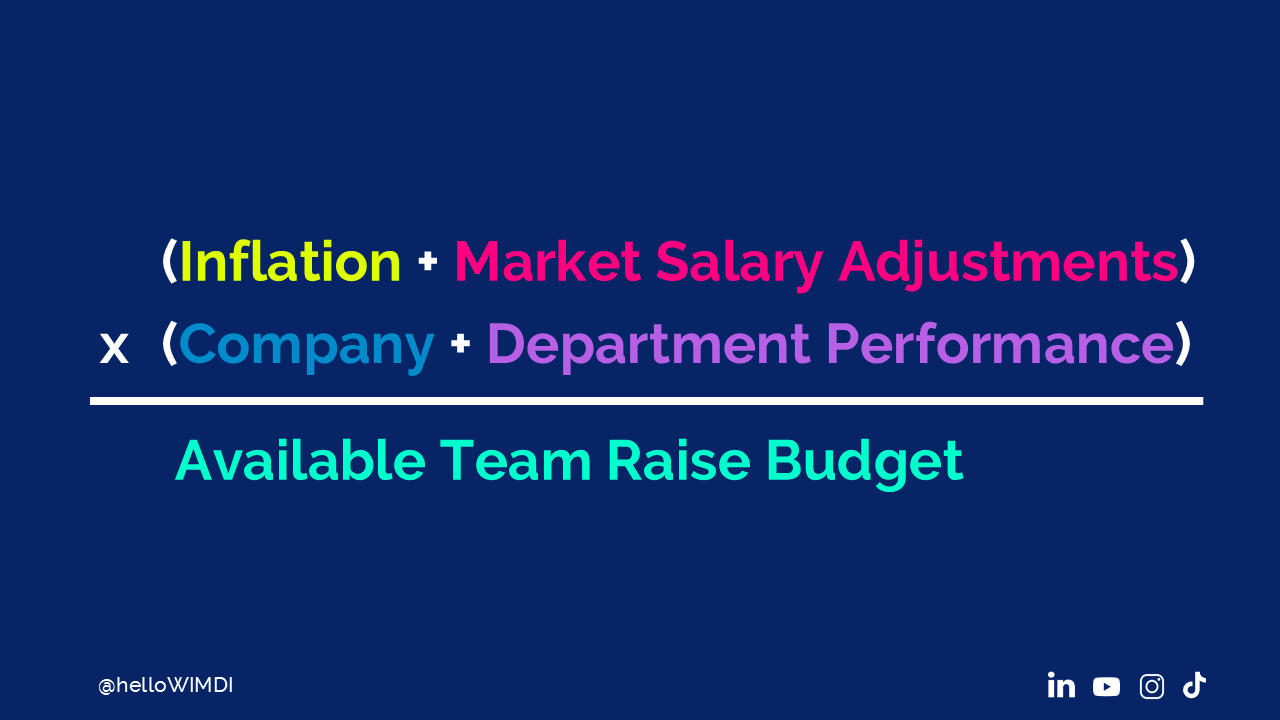
That adds up to your budget. I know that I'm oversimplifying this, but this is a process that can take a couple weeks between people, finance teams, and then we look at this budget and decide, do the raises we want to give fit into this?
If no, we need to convince finance to either give us more money, we have to give smaller raises, or we change our approach and who receives a raise.
This might look different for your company, but this is a general picture of what goes into budgeting.
Once we know what's available, then we can look at what is your pay band.
Step #2: What is Your Pay Band
A pay band is a range of pay that a company offers for a certain role. Someone with your skills and experience should be making this amount in this role.
Pay bands are structured with a min, mid, and max.
The midpoint is our target for market pay for someone fully proficient in the role.
The min is someone who's new to the role, and the max reflects someone that has a deep expertise and sustained and consistent performance over a long period of time.
To accommodate a range of experience in a role, pay bands can be pretty wide.
There could be anywhere from a 10 to 20k gap between the min and the max, but it gets even wider in more super senior roles and they're intentionally like that to ensure we can reward growth without constant promotions and titles.
As you increase in seniority and title, you might move into a pay band like this.
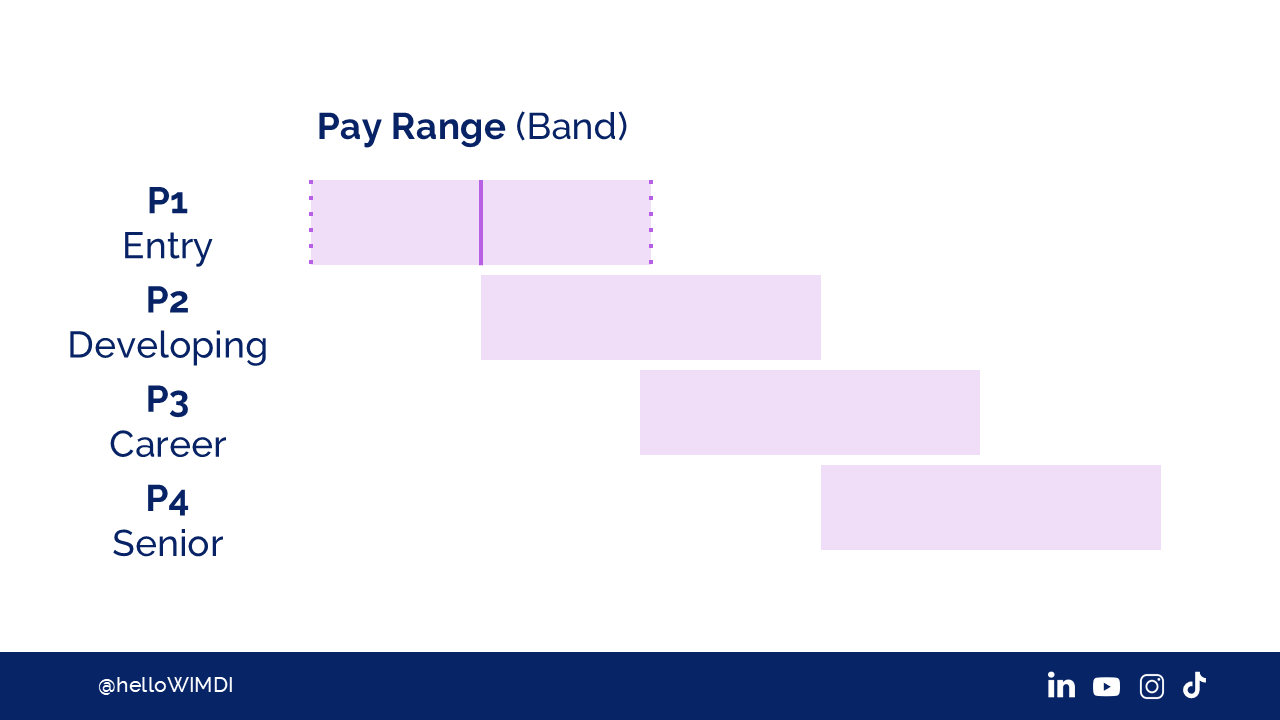
So, you can see that there's this overlap and that that creates this flexibility. A high performing employee at one level can be paid similar to a newer employee at the next level.
Step #3: Where Are You In the Pay Band
We’ve figured out your pay band, then we need to figure out what position are you in within the pay band. You might start somewhere closer to the min and let's say that's about 85% of the midpoint.
Pay bands are kind of funky like this, where your position is defined in relation to the midpoint. The midpoint is 100% and everything else is a ratio from the midpoint, so 85%. Then you move up in pay.
How does that actually work? When you are a new hire at the company or newly promoted, you'll typically fall within that min, the lower half of the band.
From there, you will grow and your pay progression is typically tied to performance, skill development, tenure.
So even though you are at 85%, which is below the midpoint, after lots of growth, lots of performance conversations and skill development, you may end up where you're closer to the max, which is 110% of the band.
Step #4: How Much Money is Your Raise Actually?
We’ve figured out the position and we have an approach to figure out the percentage increase you get.
What we'll do is map your position in the band, which we talked about, which you'll see at the top, position and range, and then versus your performance down the side to create this thing we call the comp matrix.
Each combination of performance and positioning range will have a percentage increase associated with it.
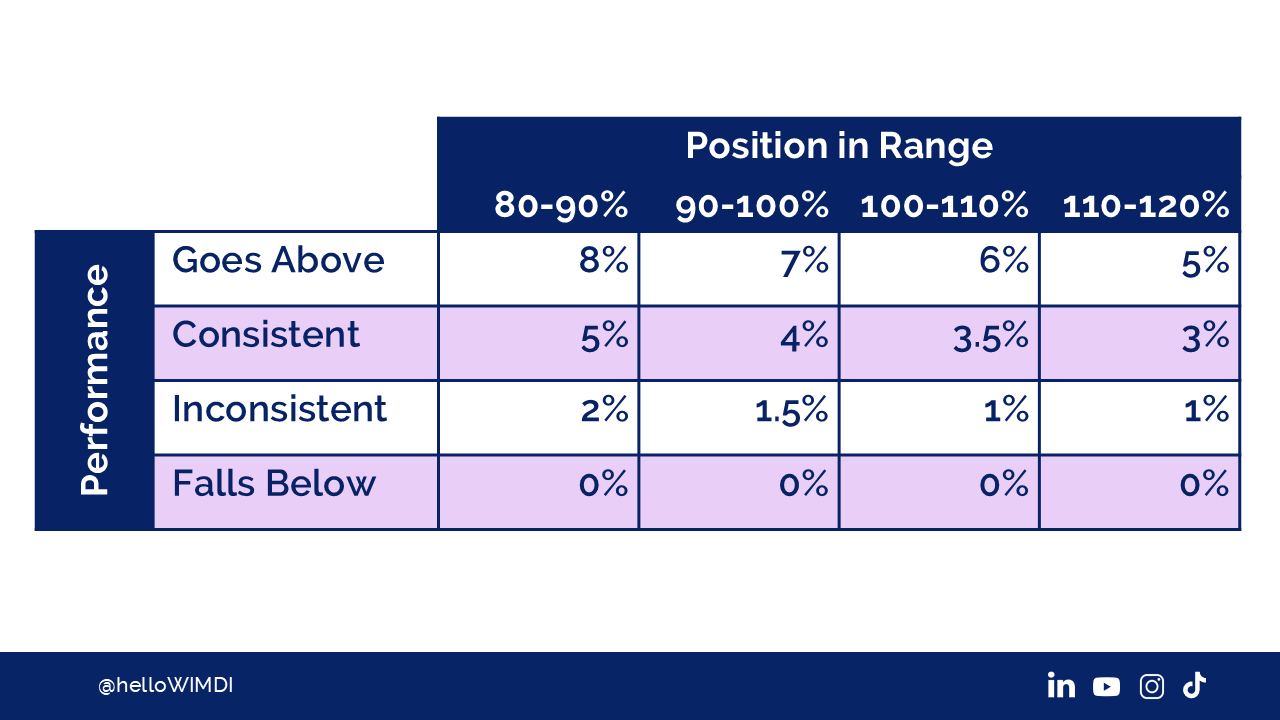
For example, if you have lower pay and you're performing really well, you'll be eligible for a bigger increase, compared to someone that's not performing well and highly paid or just not performing and isn't getting a pay increase at all.
So that's mysterious step number three, looking at what's available, what's the company performance, where are you stacking up in your pay band, and then how do those things correspond to the actual raise that's being given to you?
This whole process can take anywhere from six weeks to three months, sometimes even longer, depending on your company size, the process, and the different approvals that need to happen.
What Happens If You Want to Negotiate Your Raise?
You might be thinking, what if I don't like my salary increase and I want to negotiate?
I'll be honest, if you have your letter, it is likely too late. At this point in the process, HR and your managers and finance are relatively exhausted.
We've had a lot of conversations and back and forth about your comp, and the answer is most likely no for now, but some things they might share with you are, let's talk about improving your performance for next year and how you might get to where you want to be.
If we've missed something substantial that we didn't consider, they might say yes. A good example is in sales, maybe we somehow missed a big deal that you brought in and we calculated that your revenue impact incorrectly and so we didn't understand your performance properly.
Or maybe the market has substantially changed, and your comp needs to be reviewed again to consider the market changes.
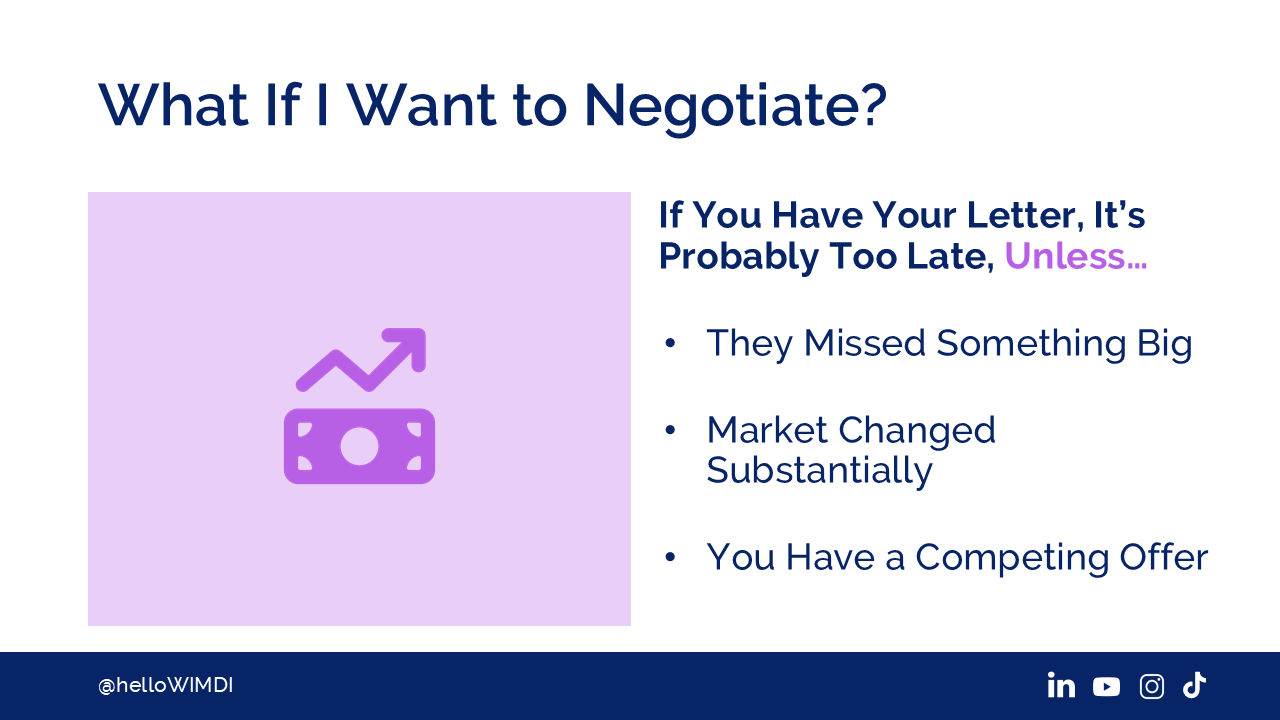
AI is an example right now where there has been exponential salary growth and we've had to keep up with that.
Pro Tips You Can Use for Comp Decisions
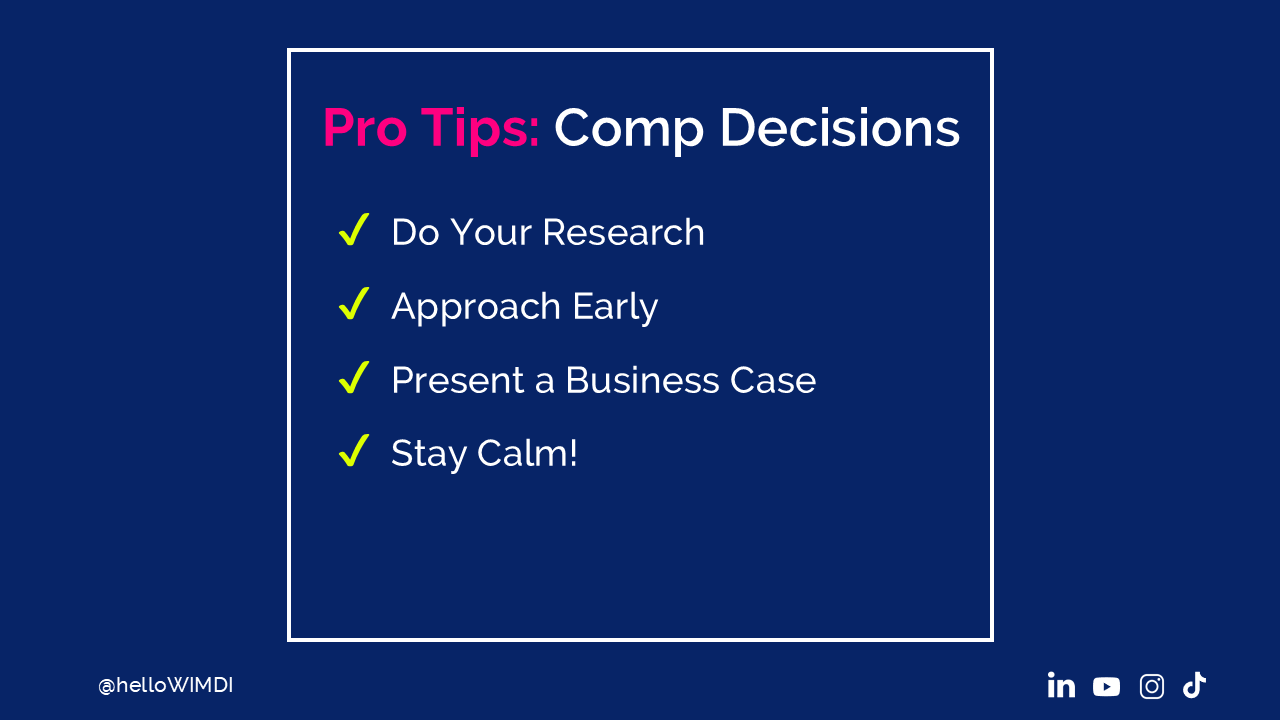
My tips for you on comp decisions. Do your research, looking at salary surveys, job postings, or companies relative in size and stage, to what they might be paying for a similar role.
Talk to your network, find peers in the industry, see what they're making, but remember there is going to be their company’s pay philosophy will come into play here and that will impact people's salary ranges as well.
Your raise is pretty much decided by the time your manager does that performance review assessment.
By the calibration period, it is 100% locked in. So, the time to discuss comp is way before your performance review and definitely way before you get that letter.
Chat with your manager, at least three months before, so that they can have the right conversations at the right time and the right mindset going into performance review season.
You can also present a business case to justify the raise, this is showing your manager how you've helped the company make more money or reduce costs. It'll make the raise that much easier to justify.
Stay calm. Coming in hot may not get you the best outcome. I would encourage avoiding, "you were wrong, this process sucks", perspective or "I don't trust your judgment of this" vibes.
It's okay to share your disappointment but do it in a way that's productive.
A way you can share this is, "Transparently, I'm a bit disappointed. I understand the decision. I want to have a conversation about how I can keep growing and how to get to my target comp next year or whatever time frame is appropriate."
Or even getting even deeper into some of the things that your manager was noticing that you can course correct.
I was the amateur cheerleader. It didn't come with pay in the same way our work does, but for me, the big reward was the front and centre spot.
I had been cheering for seven years. I had never achieved that ultimate being in centre spot at the end of the routine moment, but I had been working towards it since I decided to control the controllables.
Like I said, I was really shocked at that summer choreography camp when my coach pointed at me and moved me to that front spot.
I had this moment of, okay, my hard work paid off. I remember having the time of my life at competitions, being that star and ending the routine in front centre.
As you know, and as Kira knows, I didn't get there by just waiting for her to notice me. And comp can feel the same. This big decision is happening to you in rooms that you're not, with people who might not fully see your work.
By the time you get your letter, the decision's already made. But the good news is we've talked about a whole bunch of things in this that influence your comp and now you know exactly how to influence that.
Key Takeaways: How to Show Off the Right Things at the Right Time
These are the four major parts of the performance appraisal process in many workplaces.
It's the hidden scorecard companies are using to assess you. And just like in cheer, knowing how you're being scored changes how you train, how you show up, and ultimately, where you land in the routine.
My biggest takeaway for you is control the controllables.
There are a lot of parts in the process that are happening behind closed doors, but you can make sure you're showing off the right things at the right time, so those decision makers have the information they need to help you advance in your career.
That part is fully inside of your control.
And as each part of the process unfolds, pick one thing you can control and take full advantage of.
In the manager review, make your skills and impact visible all year long, so your manager knows you're a top performer when they sit down to look at their team's performance.
In calibration, think about sharing your wins more broadly so other senior leaders are aware of you and you have broad support when calibration comes around.
Co-create achievable goals with your managers to set yourself up for success.
And with comp, approach it early and calmly and present that business case. In all of this, make sure you do this early.
I didn't get better at cheerleading by showing up to competition without being prepared. I started doing all the things I needed to do to improve my skills in advance even when I was a kid learning gymnastics.
Then I continued to practice every week, every year, until I finally had the front dance spot.
So don't wait for a performance review season. Start sharing your wins broadly and early, connect them to your goals and the business goals.
That way the business case for your promotion and raise is easy to make, even if you're not in the room.
Now that you understand the structure, you can leverage it. Focus on building your brand, be known and talked about positively to advance your career.
You have the scorecard. Now go get your spot at the front.
My name is Simran Bahia. If you want to find me on LinkedIn, feel free to reach out to me. And if you have any questions about this topic, you can email me at simran@klue.com
More Fun Stuff!
If you loved reading this transcript, you might like to watch the video or learn more about our amazing speaker! Check it out: