Stop Hedging & Build Your Confidence – Transcript
transcript
Transcript
Stop Hedging & Build Your Confidence
Here to read instead of watch? Click through the headings to a section of the full transcript, or scroll away!
- Hedging Is the Symptom
- Lana's S.E.L.F Framework
- Security (with Examples of it in Action!)
- Empathy (with Examples of it in Action!)
- Luminosity (with Examples of it in Action!)
- Fortitude (with Examples of it in Action!)
- So Where Are You Hedging? (with Reflection Exercise!)
- A Practical Action to Take to Stop Hedging as it Happens
Edited, for length and clarity
I am super excited to be here today to speak about hedging. This is something most women have adopted into a habit, and hopefully we're going to fix that together.
My name is Lana Kinberg, and I would like to acknowledge I'm speaking to you today from the Newe Sogobia territory, otherwise known as the community of Summerlin, which is just northwest of Las Vegas, Nevada.
I am a certified professional coach, and I help individuals and teams build confidence intentionally to stop second-guessing themselves and show up with clarity and conviction.
I spent several decades in sales and sales leadership roles navigating skilled trades, which is really my glamorous way of saying I worked with plumbers, electricians, and mechanical contractors.
During that time, I watched others, mostly women, get overlooked for opportunities, promotions, or sales, because they were unable to advocate for themselves.
My purpose today with you is simple. I want to share a framework, a repeatable method with each of you that if you find yourself shrinking to fit into a room, maybe you've second-guessed yourself, maybe you dim your light so others can shine. Maybe you've been called passionate for voicing an opinion when a man might say the exact same thing, and they might be called strong, capable, and decisive.
But why are women, especially in male-dominated industries, expected to soften their voice and what causes us to do it willingly?
Today I'll speak to you about what's quietly standing between you and opportunities you've already earned. And here's the spoiler alert. It's not your resume; it's not your experience. It's not even the male-dominated industry you might be in, although I know some days it can feel that way.
It's something I had to learn the hard way and something I actually lived before I could name it. And my guess is, so did a few of you.
What Is Hedging? (with Examples!)
We're going to start with a question.
Have you ever walked out of a room, a meeting, an interview, a conversation with your boss, or even you walked away from somebody at a grocery store and immediately thought, "Why did I say it like that?"
Not what you said, but how you said it. Like the words came out smaller than you meant them to.
I have a name for that feeling. And it's called hedging.
Hedging shows up in two different ways. It's either in our language or in our behaviour.
In our language, it's that preamble to a thought, the, "I mean" before a perfectly good point, or "Sorry to bother you, but," before a completely legitimate ask.
Or "This might be a dumb question," before the smartest question in the room.
The second way it shows up is in our behaviour.
It's saying yes, when every cell in your body means no, or agreeing in the boardroom and disagreeing in the hallway. It's volunteering to take notes in a room full of people who could take notes.
And it's overexplaining a decision you have already made and don't need anyone's permission for or feeling the need to provide one more example after already providing six of them.
An important distinction that we need to make hedging isn't weakness.
In the right context, it's actually sophisticated language. When you genuinely don't know something, when you're inviting collaboration or when you're creating space for someone else's perspective.
But that's not what we're here to talk about today. The hedging I'm talking about is the kind that shows up automatically before you've even decided whether you're uncertain.
It's not thoughtful and it's not strategic. It's a habit dressed up as humility and asking yourself one question in the moment will tell you everything.
Am I hedging because I don't know or because I'm afraid of how I'll be received? And that question is the shift, because the first kind makes you a better communicator, but the second makes you invisible.
Lana's Story
So now that you have some context around hedging and what it is, have you ever hedged your way out of something you really, really wanted?
I want to tell you a story about the time I did exactly that. A promotion opened up in a part of my company I knew like the back of my hand.
I had spent 10 years building my brand and reputation there. And the success there is literally what led me to the leadership role I had at that point.
I had been promoted before, but I had never actually promoted myself. And I was ready. People around me were calling me a shoo-in. I went through six interviews, and I nailed every single one of them. At least I thought I did.
Because then I got the phone call that I didn't get the job, and I asked, "Can I ask why I didn't get the job?"
And the answer, "The other candidate had more confidence," not more experience, not more qualifications, and not better results, just more confidence.
I was disappointed and I was embarrassed because I told everybody that was my job. I laid on my couch and watched cooking competitions for two days.
But while I laid there, I replayed every single moment of those interviews in my head. And I realised I hedged my way out of that job, hedge by hedge, answer by answer.
My attempt to not sound arrogant resulted in my own uncertainty.
When they asked me what made me different from the other candidates, my answers started with, "I mean, I don't know if this is what you're looking for, but I've built strong relationships" and what I should have said?
"I have an unwavering record of building strong relationships. I consistently hit numbers while maintaining budgets. I build teams people want to be a part of."
It's the same facts, but it's a completely different signal.
Here's another one, "I could be wrong, but I think the approach I used last quarter might have worked." And that's not humility. It's a pre-apology for a result that I knew was good.
My personal favourite? "Can I ask why I didn't get the job?"
It was like a hedge inside of a hedge. I was so accustomed to softening, minimising, making myself smaller that I couldn't even advocate for myself without apologising first.
I knew I was qualified. I had the results. The problem wasn't capability. The problem was how I was packaging it.
So now I invite you to share some of your own hedges. When you hear some of my language that I used during those interviews, what might be some language that you've used?
"I wonder if..." Yes. And sometimes that can be thinking out loud, right? But if you're actually setting it up so that you're teeing up what you're about to say, it minimises the importance of what you're wondering.
"Could you maybe," oh, those are my favourites. Or "could you just," "Could you maybe?" "I mean," mm-hmm, "Sorry to bother you."
How about this one? "Does this make sense?" "Does that make sense?" After every sentence, "Does that make sense?"
Or how about when you stay quiet when you have the idea and then watch someone else say it two minutes later and everybody in the room's responds, "Uh-huh, that was a great idea."
So, think about those as we go through this, because they're there.
Oh, okay. Yeah, "I often pause to give context. I start to explain, stop myself.
Go back, give context." Yes, "So they don't get mad."
"Does it answer your question?" Yes. "Did you hear me okay?" Yeah, I was just saying it.
Why Do We Hedge?
What makes us do this? Why do smart, accomplished, capable women, some in the toughest rooms in their industries, make themselves smaller.
It's not because we're weak or inexperienced, it's not because we're not qualified.
Women in general are taught early, explicitly or implicitly, that being visible is the same as being arrogant.
That promoting yourself is less professional than letting your work speak for itself. That being agreeable keeps the peace and it keeps you safe.
And that being uncertain is a measure of humility.
So, we adapt, we soften our language, we pre-apologise, we overexplain, we say yes when we mean no, because it feels like we're being a team player. We're professional, gracious, and humble.
But there's a difference between humility and self-erasure. And a lot of us, especially in male-dominated industries, have been trained to call holding back professionalism.
And this isn't anecdotal. A 2023 national study of over 17,000 girls shows exactly when it happens.
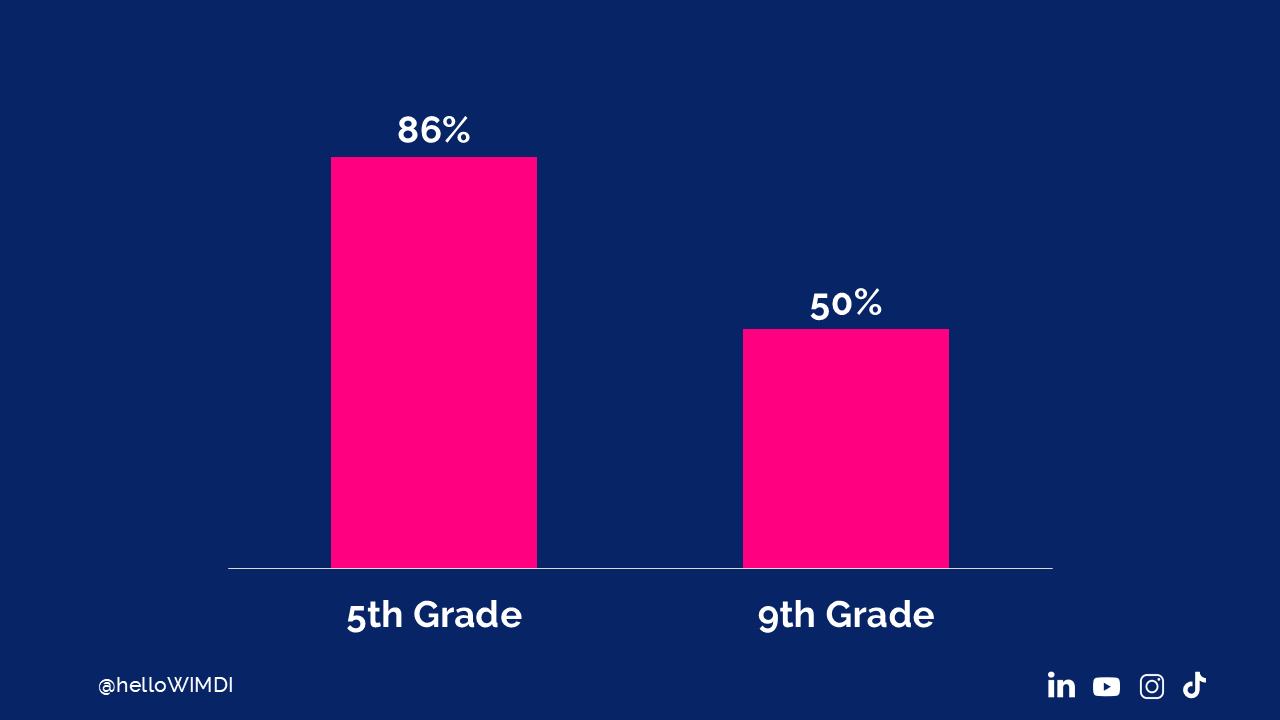
As girls enter fifth grade, their confidence is very high. 86% say they're confident in who they are, their bodies, and their abilities. Sadly, it begins to plummet through ninth grade. As they head off to high school, it dips to a startling 50%. The damage is done in the years when girls are just learning how to be in the world.
And from that same study, only 39% of girls feel like they belong. That's well below half. When you don't feel like you belong somewhere, what happens? You don't speak up.
That self-doubt doesn't stay at school. It follows these girls into whatever they believe they're capable of.
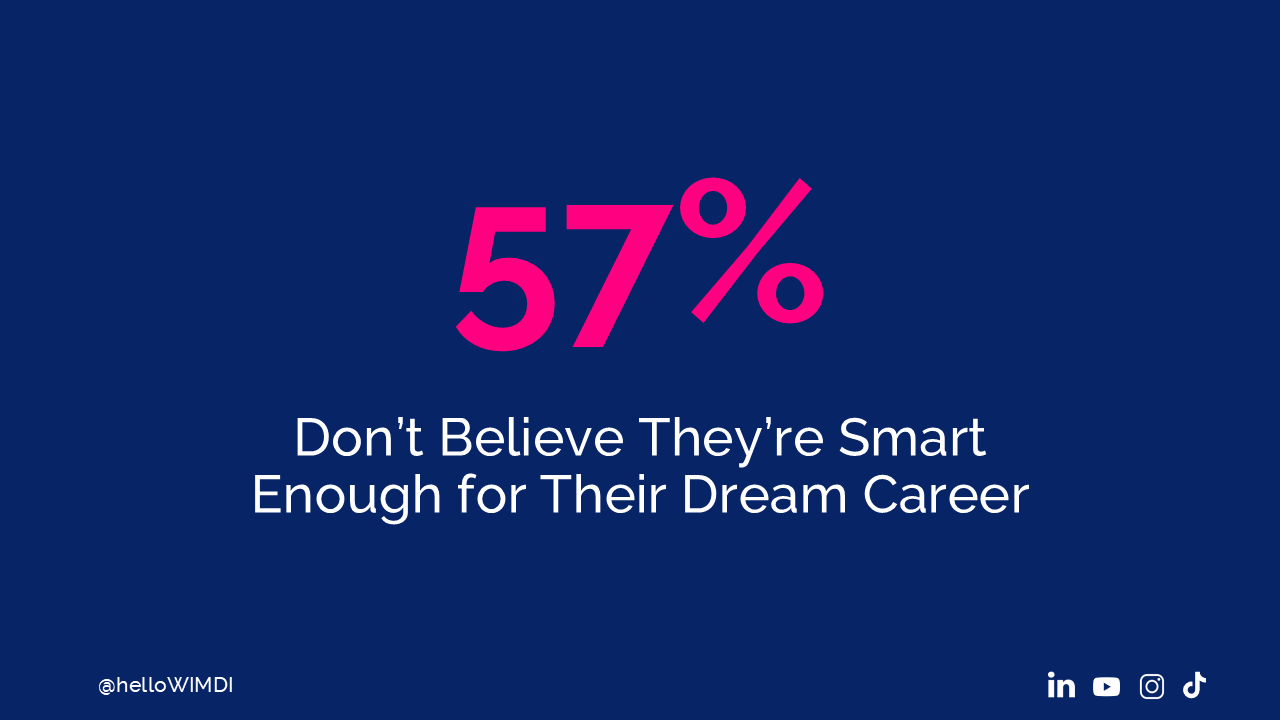
More than half of girls don't believe they're smart enough for the career they actually want. Even ones with a 4.0 grade point average. So, what do we do with all of that? They go quiet.
Two in three girls don't speak their mind because they want to be liked. Let's sit with that for a second, because I'd be willing to bet at least a few of you recognise that feeling.
Because that ninth grader, she grew up, and she's sitting in your meetings. She might be on this call right now. But here's the good news. As women's experiences increase, their confidence follows. Our failures become lessons, our successes become fuel.
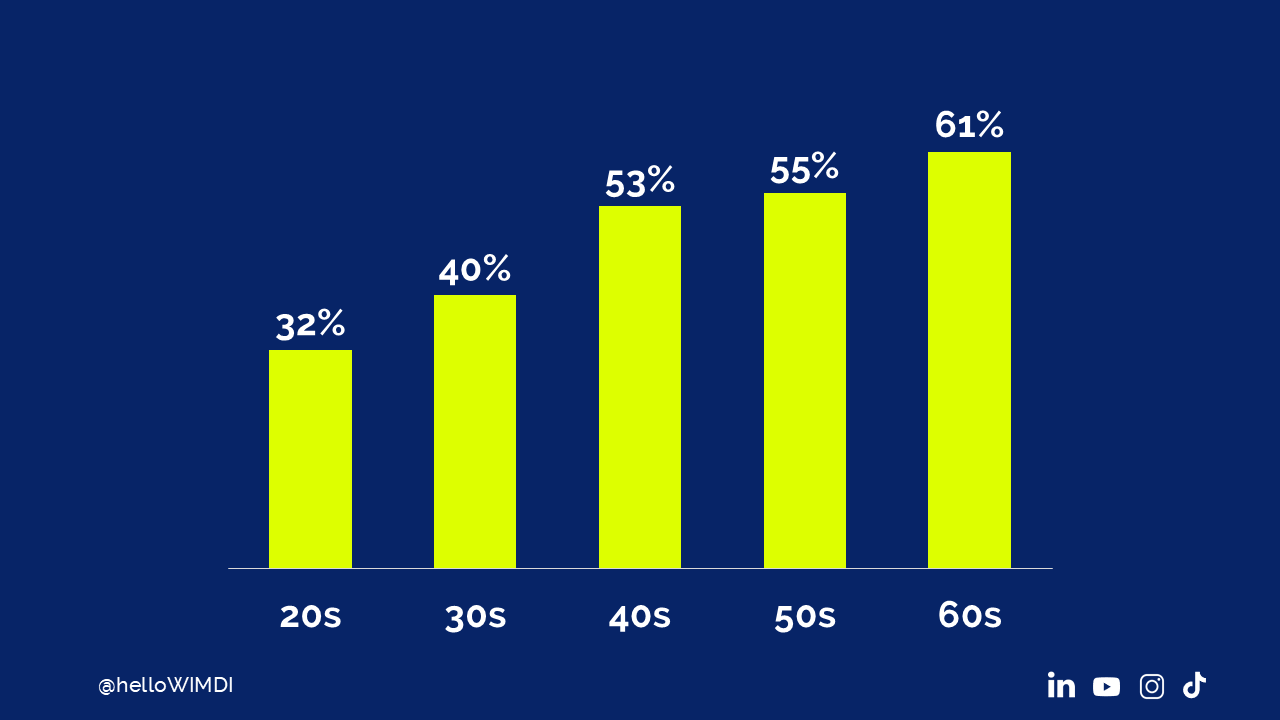
But consider the many opportunities lost in the early years because of fear and lack of confidence.
So, let's go through some scenarios.
This is actually false, but you've heard it before and you've probably even shared it. Maybe you've even used this to explain something about yourself.
The statistic came from an internal HP document that was never actually published, it was never peer reviewed, and it was never studied in full.
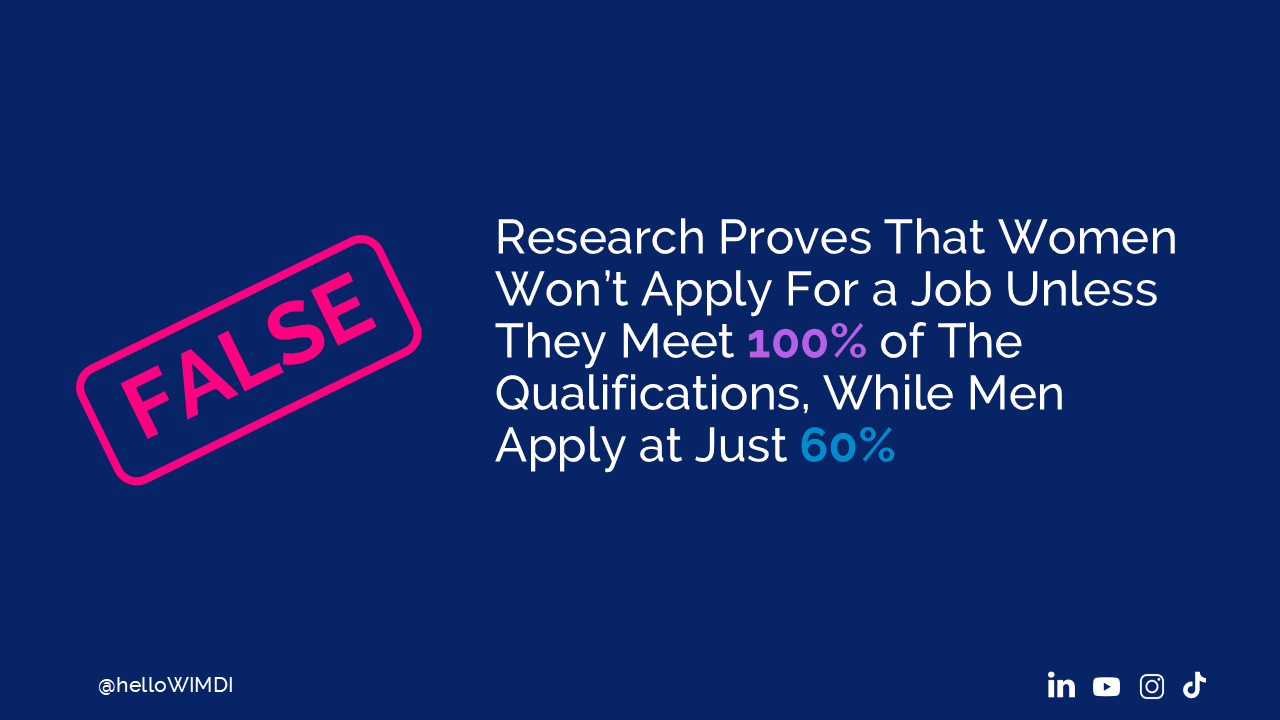
When researchers actually went looking for the real reason women don't apply, it wasn't a confidence gap. It was practicality. They didn't want to waste their time.
But many of us believe it anyway because it feels so true. Because it gives us a teeny tidy little nice little neat explanation for something that's actually a lot more complicated.
And that's what we do with stories that we make that we feel comfortable telling. We stop questioning them. And that is exactly what hedging does inside your own head.
Here's the next one.
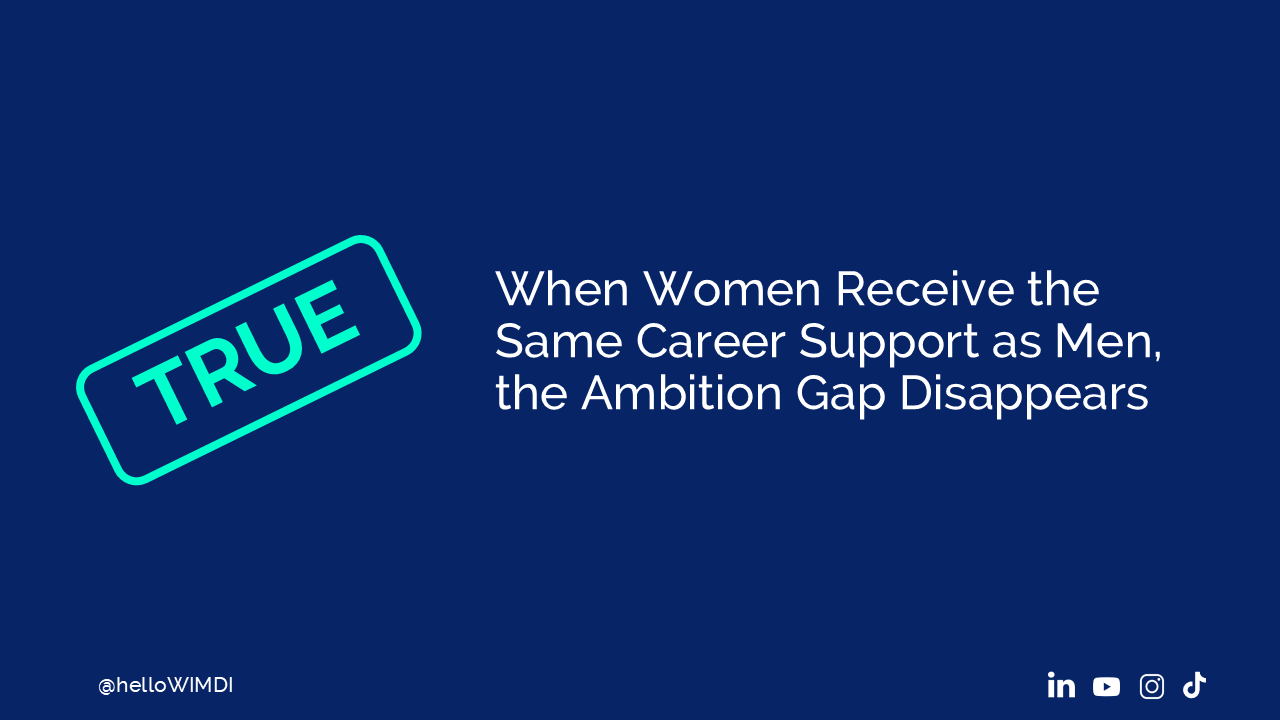
It's true. According to McKinsey and LeanIn.org's 2025 Women in the Workplace Report, when women and men receive similar levels of support from managers and senior colleagues, they're equally enthusiastic about getting promoted at every career level.
It's false. HP's Work Relationship Index, which surveyed over 15,000 workers across 12 countries found that 52% of women business leaders feel confident in skills like communication and self-awareness compared to only 39% of men.
48% of women leaders feel confident in technical skills versus only 38% of men.
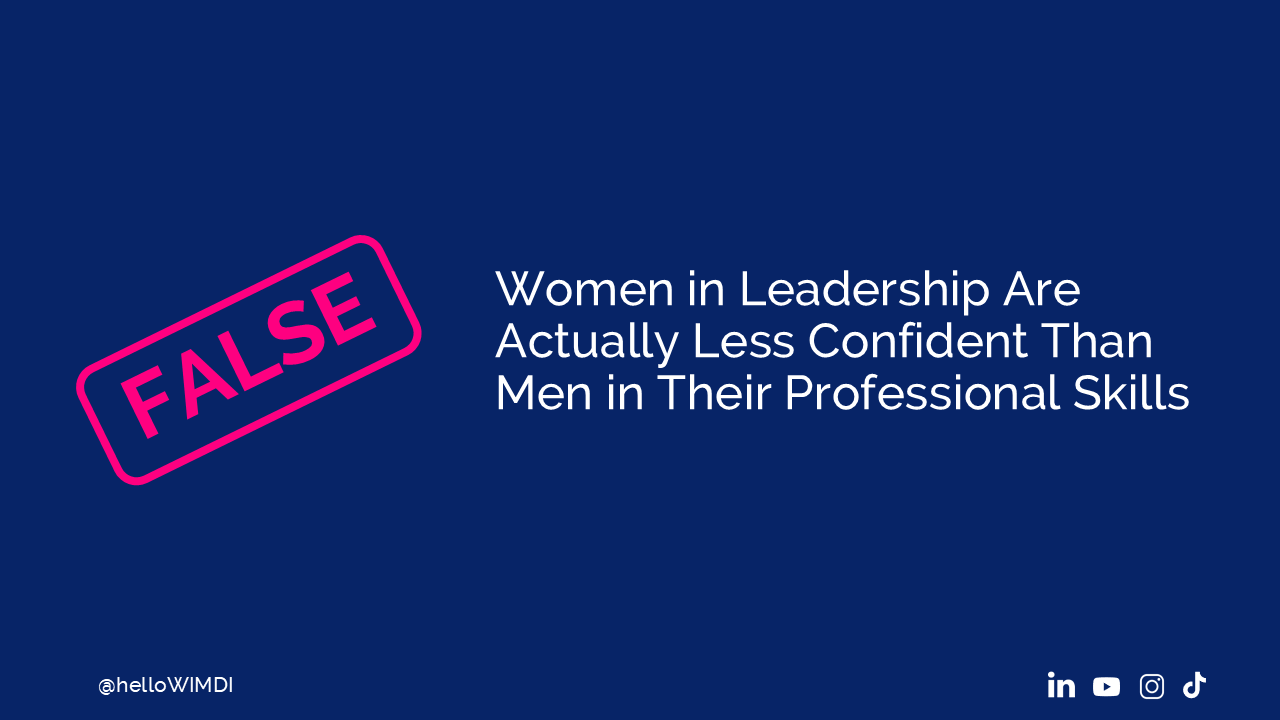
So, this really challenges the stereotype directly with data. The confidence gap among women who make it to leadership actually inverts.
What Are the Hidden Costs of Hedging in the Workplace?
Here's what we've established, the stories we tell ourselves, the ones that we feel true, the ones that are comfortable, the ones we share at conferences and nod along to, a lot of them, just don't hold up.
The HP stat? Never peer reviewed. The confidence gap in leadership actually inverts in our favour.
So, if the data doesn't support the story, why do we keep living it? Because knowing something is false doesn't automatically change your behaviour.
The hedge doesn't care about the data. It shows up anyway. And that's what we're going to talk about now because most of us aren't tracking what it's actually costing us in real time.
#1 Credibility
The first is credibility.
Every time you say yes when you mean no, you send a signal. Not "I am capable," but "My time is negotiable, my limits are negotiable, I am negotiable."
Credibility isn't built by doing everything that's asked of you, it's built by being clear about what you stand for and holding that line.
And when you can't say no, people stop trusting your yes.
#2 Visibility
The next cost is visibility.
I touched on this earlier. Have you ever been in that meeting and you had a great idea, but you didn't say it. And then someone else said it two minutes later and everyone nodded.
That's a hedge. It's a behavioural hedge.
You made yourself invisible in the moment that mattered most. And in male-dominated industries, invisibility compounds. The less you're seen, the less you're heard, the less you're heard, the less you're considered. And no one promotes invisible.
#3 Self-Trust
The third cost is self-trust.
Every time you second-guess your language or behaviour and you don't challenge it, you reinforce a belief that your instincts can't be trusted, that you need to soften, qualify, or apologise before you open your mouth.
Self-trust is the quietest cost of hedging, and it's also the most corrosive.
#4 Opportunity
And finally, cost number four, opportunity.
I already lived this one and shared it with you. I didn't get that promotion because I hedged myself out of it in the room in real time.
I was qualified and I was ready. And I talked to the interviewers out of choosing me. They saw lack of confidence. I thought I was being humble.
Opportunity doesn't wait for you to feel ready to stop hedging. It just moves on without you.
Hedging Is the Symptom
Four costs: credibility, visibility, self-trust, and opportunity.
How do we minimise our hedging? For a long time, I thought the fix was easy.
Just stop hedging, monitor my words, catch myself. I might apologise more, delete the justs and the sorrys. But that's treating the symptom.
Hedging is what feeling but not being confident looks like in behaviour. And it's the symptom. Hedging isn't the disease, it's what happens when confidence is missing.
And you are not in the minority. "Psychology Today" research from 2019 shows that up to 85% of people struggle with low self-confidence at some point, which affects their careers. 85%.
It's important to recognise that there is a difference between feeling confident and being confident.
Feeling confident is rehearsed. It's low stakes, it's very situational. You know your audience and what's coming.
But being confident is structural. It's like an inner scaffolding.
It's holding you steady even when everything else is uncertain. When we are aware and certain about our thoughts, feelings, and actions, we don't need a preamble.
We're not driven by the outcome because we know we can handle whatever the outcome is.
So how do we move from feeling confident to being confident? Confidence isn't a gift. We aren't born with it. It's not reserved for the naturally charismatic or the effortlessly bold. Confidence is a decision.
Research tells us that we make 35 decisions every single day. Most of them we don't even notice, but some of them, the ones that define us, those are the ones that matter.
We develop confidence like any other skill: by making one decision at a time. We decide to raise our hand when no one else will or to speak up when the room is silent or to take the risk when we don't know the outcome to allow ourselves to fail knowing we will learn something.
And every one of those are confidence decisions, but all decisions need a base. So, I asked myself, what does it actually take to be confident and not just feel confident? What are the foundations of self-confidence?
Lana's S.E.L.F Framework
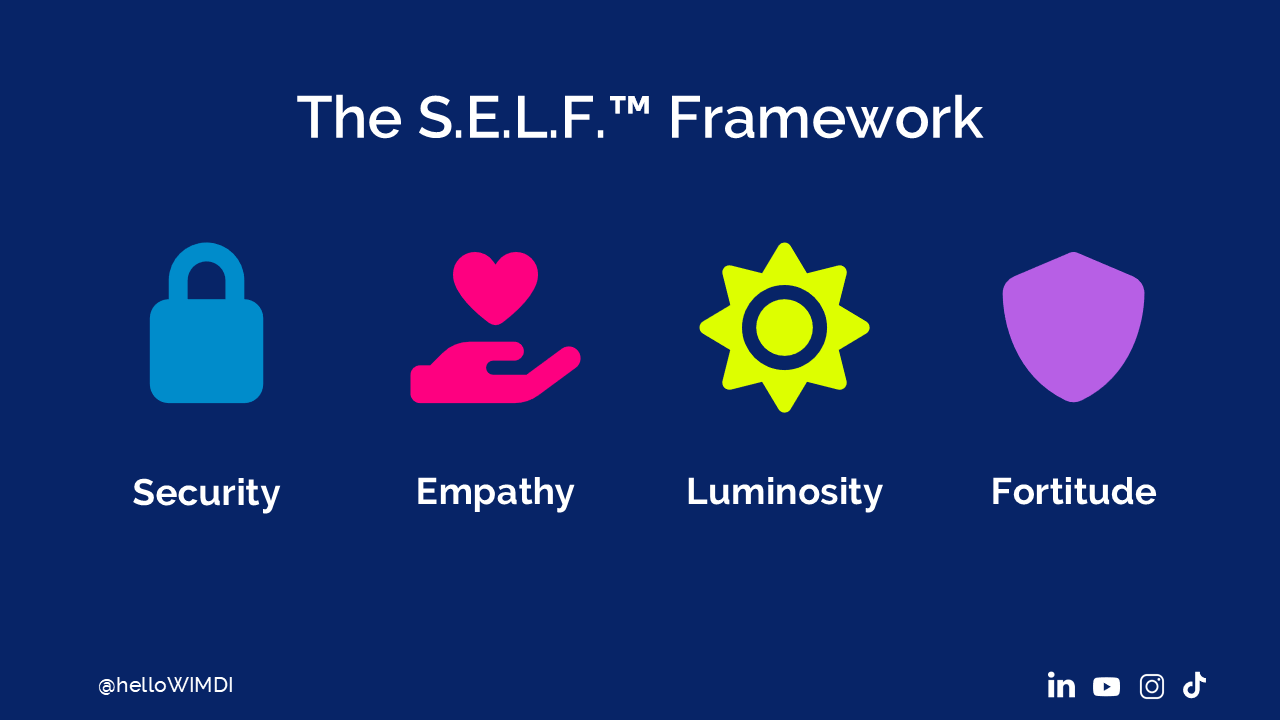
The answer became clear to me. Security, empathy, luminosity and fortitude are S.E.L.F. pillars that hold up confidence.
And when one of them is shaky, the hedging starts. I'll show you how each one drives our behaviours.
Security (with Examples of it in Action!)
The first pillar is security.
I want to be clear about what security is because it's not confidence in the traditional sense, it's not the absence of doubt. It's not walking into a room without your heart beating faster.
Security is the foundation of confidence because it's knowing who you are at your core, your identity, your values, your boundaries.
You know these things so clearly that when someone challenges you or dismisses you or tries to reframe who you are, you don't unravel because you are not available for redefinition.
For those of us in male-dominated industries, this pillar is not optional. You cannot build visibility, navigate difficult dynamics, or advocate for yourself without first being grounded in that internal knowing.
Security is not your title and it's not your salary. It's not your seat at the table. It lives in that part of you that knows, even when the room doesn't reflect it back, that you belong there.
What does security look like in action?
You speak without pre-apologizing. You hold your position when it's challenged, not out of stubbornness, but because you know what drives your beliefs. You recognise the difference between feedback and dismissal.
You can say, "I don't know," or "I disagree," without feeling like your competence is on trial. You don't change who you are to fit the room; you bring who you are into the room.
When your foundation and your identity and your values and boundaries are all in alignment, what you get is clarity.
You don't hesitate before you speak because you already know what you stand for. That's security, and it's what we build everything else on.
I've already shared one story with you. Here's another that might sound familiar.
My business unit was part of a major acquisition, and I was chosen to be part of a committee that would lead us through this change in the organisation.
I was the only woman chosen to be on the committee, which isn't unusual given the ratio of men to women in my company.
I'm in the first meeting, the one we're all sizing each other up and getting to know our counterparts and each other.
And I introduced myself and I make a point on something I feel strongly about, and the conversation moves on like I never even spoke.
I try again. And this time I'm more clear. I think I'm more direct. I articulate my perspective.
And as I'm making my point, someone across the table says, "Well, you're certainly passionate."
I feel it, that pull that invitation to soften, to say, "Oh no, I just think it's interesting," or, "Well, I could be wrong," to make myself smaller so the room gets more comfortable.
But instead, I stop and I look them in the eye and I said, "Yes, I feel strongly about my position."
And the room shifts. There's nodding. Suddenly there's discussion.
People start engaging with this idea in a way that they weren't before. And not because I got louder and not because I performed confidence, but because I didn't abandon myself in the moment. It would've been so easy to do that.
That's what security looks like in action. I wasn't rattled by the dismissal or the comment because I knew why I was there. I knew what I believed and why I believed it.
My identity wasn't up for negotiation just because someone questioned my tone. And my foundation held, my values guided me, my boundaries kept me from self-erasing and the clarity I had about my own perspective, that's what the room finally felt.
Security doesn't announce itself, it just keeps you standing in exactly the moments designed to make you sit down because you know who you are, what you represent, and you build your confidence in staying true to that.
Empathy (with Examples of it in Action!)
The second pillar of S.E.L.F. is empathy.
I want to start by reframing what that word means. Because most of us were taught that empathy is something we offer other people.
And yes, understanding someone else's perspective and meeting them where they are and being present with their experience, all of those matter.
But in the S.E.L.F. framework, empathy starts somewhere else entirely.
What if the most important act of empathy you could ever perform was the one you offered yourself?
Women in male-dominated industries are often praised for being tough, for not being too emotional or passionate, for pushing through. And while that resilience is real and valuable, what I see happen over time is that we become so practised at being strong in the room that we forget how to be honest with ourselves. We stop noticing our negative self-talk.
We become reactive instead of course-correcting. And we frame struggle as weakness instead of data, data that is telling us something very valuable, we punish ourselves for not knowing what we hadn't yet learned.
That inner voice, the one that fires before you've even finished the thought, that's where empathy does its most important work. And I call it positive self-talk. It's not affirmations in a mirror and it's not toxic positivity.
It's the discipline of choosing a different narrative when the one running the show is working against you. And when you practise that, something shifts.
You become more intentional, you stop responding from fear and start responding from clarity, you acknowledge someone else's perspective without abandoning your own, and you can sit in a hard moment without letting it define you.
Empathy reconnects you to your humanity. It's the part of you that can look at where you are and say, "I understand why I feel this way and I can choose not to stay here."
It's quieting that inner critic and extending grace, especially in the cringe-worthy moments and understanding that you are deserving of the same compassion you would offer anyone else.
That's not soft, that's practise. And it changes everything about how you show up.
So let me show you what empathy looks like in both directions. The empathy you create for others and the empathy you create for yourself.
I had a client, I'll call her Samantha, who came to me completely frustrated. She was sitting in meetings with people she found impossible, big egos, bad ideas, no self-awareness.
She genuinely could not understand why they were the way they were if they weren't open to ideas and discussions. But more frustrating was her inability to manage how she felt in front of them.
I asked her to try something. The next time she was in a room with one of the people she found impossible, I asked her to picture them as a five-year-old, innocent, still learning, not malicious, not ego-driven, just trying to figure it out, unfinished.
It changed everything for her. The relationships shifted. The tension erased because she stopped reacting to who they were performing and started responding to who they actually were.
That's empathy directed outward.
But then I asked her to take it one step further. I asked her to take a photo of herself at five years old and put it somewhere accessible.
And I said, "The next time your inner critic shows up, and it will, I want you to look at her. I want you to ask yourself, 'Would I ever speak to that little girl the way I'm speaking to myself right now?'"
She called me a week later and said it was the most powerful thing she'd ever done. Suddenly she had perspective.
She recognised how cruel she was being to herself and offered grace instead of frustration. The more patient she became with herself, the more she was able to extend the same grace to others.
We all do the same thing. Every cringe-worthy moment in or out of a meeting, our inner critic can be relentless. Would you ever speak to another person the way you sometimes speak to yourself?
So, I invite you to try this yourself. Find a picture of yourself as a five-year-old and put it somewhere that you can access it.
For me, that's my phone. And when that negative voice shows up, I look at her and I remember she's deserving of all the grace and compassion I would give anybody else.
Because that little girl is still in there and she's happy in that photo and she's still deserving of my compassion. And that's where we shift.
It's a practise skill because here's what happens when we don't extend grace to ourselves, that's when we hedge, that's when we apologise before we speak, we shrink before we've even started, and we self-erase because it feels way less scary than being seen and judged.
Empathy is that pause between the thought and what you do next. So, feel it in that moment, name it, and give yourself the grace to keep going anyway.
Luminosity (with Examples of it in Action!)
The third pillar is luminosity.
I want to start by sharing what it's not because when people hear, "Let your light shine," they immediately think it means being the loudest person in the room or the most charismatic, the most willing to self-promote. That's not what I'm talking about.
Luminosity is presence.
It's your reputation, it's your brand, and it connects directly to something called your confidence quotient, which we're going to talk about in just a moment.
But first, I want to show you what luminosity actually looks like in action.
Have you ever been outside of a room terrified to go in because you don't know anyone? That feeling right before you push the door open?
As I've gotten older, I rarely feel that way. And not because I don't have jitters, because I do, but here's what gets me through it.
I ask myself, "What's the absolute worst thing that can happen?" My answer, "I trip on my way in, I fall, I tear my dress, I'm lying there, stark naked on the ground."
Honestly, if that's the worst thing that can happen and I know I would survive that, what else could possibly go wrong?
That thought, that knowing, that's luminosity at work, it's the belief that your presence in that room matters more than your fear of walking into it.
Luminosity isn't your logo or your LinkedIn; it's not your title or your track record. It's what people say about you when you're not there. You're already communicating something every time you walk into a room. The question is, is it the message you want to send?
Luminosity is the practise of remembering that and refusing to dim again. You enter a room without pre-apologizing for your presence. You speak not just with certainty, but with conviction.
You own and celebrate your accomplishments without framing them as luck or teamwork alone. Ultimately you stop shrinking.
No more, "This might be a silly question" or "I'm not sure if this is right." You know what you want to be known for and you're actively building that reputation.
That's luminosity and it starts the moment you decide to stop making yourself smaller than you are.
So, this is where your confidence quotient comes in. And I want to be clear, it's not how much confidence you have, it's how other people experience you.
It's your energy that you radiate, the authority that you carry, the way your presence communicates before you even open your mouth.
Research out of TIAS Business School and Professor Ron Meyer identifies components that make up how others experience you: your credibility, your trustworthiness, the risk they associate with you, but it's also your likability. Are you relatable? And do you seem genuinely open and kind?
The higher your CQ across these four areas, the more influence you have. Because people lean toward those who make them feel something positive. The person who makes them feel safe and heard.
And here's the part that matters the most. Your CQ is not fixed, it's built. Every interaction, every room you walk into, every time you choose presence over shrinking, you're either building it or diminishing it. The beauty is you get to choose which.
I'll tell you a story about Joanna, also not her real name, but her story's very real.
She was a sales rep who couldn't get any traction in her territory. Customers were ghosting her, her deals went to competitors, her numbers were dropping and she knew it.
When I started working with her, the problem became clear pretty quickly. She was late to meetings, slow to follow up. She complained about her products and talked negatively about others.
She had no idea how any of that was landing. And I said to her, "Perception is reality. It doesn't matter what you intend. What matters is what people experience when they're with you. And right now, they're experiencing someone who doesn't believe in what she's selling, including herself."
Gaining this self-awareness landed hard. So, we got to work and we rebuilt her follow-through. Some simple things.
We reframed the way she talked to her customers, not just about her products, but the way she carried and thought about herself.
She started showing up differently. She was planning events, building relationships, and bringing energy instead of friction. She became excited about the work, and she enjoyed the meetings and the interactions. And suddenly she started showing up early.
Word spread and business came back, not because her territory changed, not because her product changed, because she changed what people experienced when she walked in the room.
And that's luminosity, and that's your confidence quotient working for you instead of against you. Joanna didn't need to be louder or more polished. She needed to align who she was on the inside with what she was projecting on the outside.
When those two things matched, people felt it and they trusted it. People make decisions about your credibility, your trustworthiness, and how much risk they associate with you based on what they observe, not what you know and not what you intend. It's what they see.
Perception is reality. And luminosity is how you take ownership of it.
Fortitude (with Examples of it in Action!)
The last pillar is fortitude. Security tells you who you are, empathy keeps you connected to yourself and others, luminosity gives you the courage to be seen.
Fortitude is what happens when all three of those get tested at once and you have to decide, in real time, whether you're going to act on what you know or crumble in the face of it.
It's grounded in the knowledge and experience you develop as you fail, learn, and grow. It's what keeps you standing when everything else around you is pushing back. It's quiet and it's locked in. It doesn't look like anything from the outside, but you feel it.
So many people think fortitude and resilience are the same. And the difference matters.
Resilience is picking yourself up after something knocks you down. It's reactive and it's necessary. It's that recovery and the learning that comes from the experience. It's what makes you say, "Never again!"
Resilience is what I developed after that phone call telling me I didn't get the job. I had to feel it, process it, and eventually get back up so I could get off my couch and rejoin the world.
Fortitude follows resilience.
I didn't have the fortitude I needed during those six interviews before I knew how they would end to show that I believed in myself, to show up fully, speak clearly, and not apologise for being there.
But here's the beauty, fortitude is cumulative.
Every time you push through something hard or stayed in a room that made you uncomfortable, you build it. Every time you ask for what you're worth, deliver tough feedback or try it again after something didn't work, you build it. You have more of it than you think.
And for those of us in male-dominated industries, fortitude is often the unsung story because you have to develop it, usually without fanfare, often without witness, sometimes while just pretending everything is fine, but it's there.
Your hardest moments aren't your scars, they're your credentials and they help you gain confidence. So, the promotion I hedged my way out of was one story I shared with you where my lack of fortitude cost me the opportunity.
This is about what happens when fortitude is the only thing you have left to stand on.
I had a client, I'll call her Maya. Maya was in manufacturing sales, and she was good at it, really good, build great relationships, hitting numbers, advocating for her team, the kind of person who lifts the room when she walks in.
Then one day, the CEO of her company received a letter, not an email, an actual letter cut out in ransom-note style.
It said Maya had been getting her sales the “old-fashioned way”, implying that her success had nothing to do with her ability, her relationships, or her results.
Someone she worked with, someone she thought she knew, someone she had may have even considered a friend, sat down and constructed an anonymous letter, went through the trouble to cut out letters out of a magazine and paste them onto paper, designed to destroy her reputation. And Maya had done nothing wrong.
She had been nothing but an advocate for everyone around her. And suddenly her integrity, her professionalism, everything she had built was being questioned because of a cowardly anonymous attack.
She was furious and devastated and terrified. Because think about it, she didn't know who did it, which meant she didn't know who to trust.
Every meeting, every hallway, every conversation, she was looking around wondering, "Is it you? Is it you?"
She eventually made the decision to leave the organisation and she went to work for one of their vendors, which turned out to be the best decision of her professional life.
But here's the part that required fortitude. Before she left, and for many years that followed, Maya had to keep showing up around the same people in the same rooms, knowing that someone in that circle had tried to take her down in the most cowardly way imaginable.
She couldn't confront someone she couldn't identify, and she couldn't defend herself against an anonymous attack.
All she could do was keep showing up, keep doing the work, keep being exactly who she knew herself to be, even when someone was actively trying to rewrite that story.
And believe it or not, this happened again. She figured it was the same person, once again, made the decision to not let it define her. And that's fortitude.
Not the leaving and not the fresh start, the showing up every single day before she knew how it would end and before her reputation was fully restored, before she had any proof that doing the right thing would be enough.
Fortitude is what you do when you have no guarantee, only conviction.
So, think about your ransom-note moment. The one where someone or something tried to rewrite who you are, and you had to decide, "Do I let this define me or do I keep going anyway?"
Your hardest moments aren't your scars, they're your credentials and you've earned more of them than you know.
Security, empathy, luminosity, and fortitude, four pillars, one framework.
And every single one of them is already inside you because you've been drawing on them your entire life and career. You just didn't have a name for them yet. And now you do.
So Where Are You Hedging? (with Reflection Exercise!)
Here's where we take it from concept to practise. Knowing the framework is one aspect, but knowing exactly where you need to use it, that's where the real work begins.
Hedging isn't random. It shows up in patterns, specific rooms, specific people. And once you can see your own pattern clearly, you can interrupt it.
Let's get specific and examine where it happens. I invite you to think about the last 30 days, not your worst day, not a dramatic moment, just the last 30 days.
At the beginning, some of you put in the chat what your hedge was. Now think about where that hedge happened. Was it in writing? Was it in a room? Did you add a, "Sorry to bother you," before you sent an email?
If you're like me, there's probably many of them that you could think about in this moment. But what are the ones that show up the most?
"I soften feedback." "I notice myself often adding a 'just' to my emails, requesting it that you need for work." So now let's go a layer deeper because the what is important, but the where and the who tell you everything.
Who are you adding a "just" to my emails? Is that a specific group of people? Is it a specific person? Is it someone with a title that makes you feel like you need to earn your place before you speak?
I asked my stepdaughter this question and she said, "You know, I usually do it when I'm sending information in an email and it's always to C-suite men." And I said, "Why do you think that is? What makes you do that?" And she said, "I don't want to be wrong, I don't want to be embarrassed." We all do it.
But there's always a trigger, a specific type of authority, a specific dynamic or a specific fear. And once you know your triggers, you know exactly which pillar of S.E.L.F. needs you in that moment.
Maybe it's security because you're not sure you belong in the conversation. Maybe it's empathy because your inner critic is louder than your conviction.
Maybe it's luminosity because you're about to make yourself invisible. Or fortitude because the pressure to go along is stronger than your desire to hold the line.
Once we have that and once we can name it, that's when we can actually do something about it.
A Practical Action to Take to Stop Hedging as it Happens
Hopefully by now you have some idea of the S.E.L.F. framework and you have some awareness of where your hedging lives and what triggers it.
The next question is, what do you actually do in the moment when you feel it coming?
Here's a practical, repeatable move you can use starting today. There's three parts and you already know all three because you've been building toward them without even realising it.
The pause, the stop, and the start.
The first move is the pause. To be clear, the pause is not a hesitation and it's not weakness. It's not losing your nerve.
I like to say there's power in the pause. The pause is you choosing not to react from fear. So, in that pause, you assess, you breathe, (inhales) (exhales) and you ask yourself a question, which part of myself needs me right now?
Is it security? Am I feeling like I don't belong? Is it empathy? Is my inner critic louder than the rest of me?
Is it luminosity? Am I about to make myself invisible in the moment that actually calls for my presence? Or is it fortitude? Am I about to cave on something that I absolutely believe in?
Name it quietly to yourself in that pause and in that breath. Because you cannot interrupt what you cannot identify.
When you feel it, (inhales) take your pause. And then now we interrupt it. And this is where it gets simple. It's not easy, but it's simple. Just drop the qualifier.
Whatever you were about to say, you could say it inside your head for a while and then just say it. Drop the qualifier, drop the permission ask, drop the pre-apology.
Not, "Sorry, this might be a stretch." Just say it.
Not, "I could be wrong." Just make the point.
Not, "Can I share something?" Just share it.
The hedge lives in the preamble, it always has. If you cut the preamble, what's left is your actual voice.
And that's it. That's the stop.
And then the start.
Replace it with a statement. Not a performance, not a version of yourself you have to rehearse, a clear, direct, credential-building statement that reflects what you actually know to be true.
You already know what this sounds like. I gave you examples at the beginning of the talk. In my interview, "I mean, I don't know if this is what you're looking for, but I built strong relationships."
It should have just been, "I have an unwavering record of building strong relationships." It's the same facts; it's a completely different signal. This is not about being louder, it's not about feeling or performing confidence.
It's about making that decision, a conscious, deliberate decision to remove the noise between your value and the room's ability to receive it.
Confidence isn't a gift, it's a decision. And pause, stop, and start is how you practise making it.
Before I close, I want to give you one last thing to take with you, because here's what I know about everything we've talked about today.
You're going to leave this evening feeling it, feeling clear, feeling ready, and then life is going to happen. The room is going to get loud.
Someone is going to question your tone or your integrity or dismiss your idea or make you feel like you need to earn your place all over again.
And in that moment, come back to yourself. Hedging isn't a character flaw, and it's not proof that you don't belong. It's a signal that one of your S.E.L.F. foundations is telling you it needs attention.
So when it shows up, and it will, come back to security when you forget who you are, come back to empathy when you'd never speak to anyone else the way you're speaking to yourself, come back to luminosity when you're about to make yourself invisible in a room that needs you, and come back to fortitude when the evidence of everything you've already survived is right there and you're not using it.
S.E.L.F. isn't just a framework, it's a place to return to. Every time the room gets loud and your voice gets small, it's your way back to yourself because that's where confidence lives.
And remember this number, 85% of us experience a confidence gap at some point. That means the woman who seems untouchable in the boardroom, the one who never seems rattled or to doubt herself, there's an 85% chance she's wrestled with this too.
You are not broken, you are not uniquely unconfident, and you are not behind. You just haven't made the decisions yet.
So, the next time you catch yourself hedging, pause, ask which foundation needs you, is it security, empathy, luminosity, or fortitude?
And go there and make the statement. You are already in some of the hardest rooms in your industries. You've already done things that required more courage than most people will ever be asked for.
You don't need more confidence to belong here. You just need to decide that you do.
Thank you everyone. It has been an honour to be on this call with you today.
More Fun Stuff!
If you loved reading this transcript, you might like to watch the video or learn more about our amazing speaker! Check it out: