Online Networking Without the Cringe – Transcript
transcript
Transcript
Online Networking Without the Cringe
Here to read instead of watch? Click through the headings to a section of the full transcript, or scroll away!
- The Shift to Online Networking Post-Pandemic
- The Power of Networking
- Paige’s Networking Example
- Why Does Online Networking Feel So Cringe?
- I Don’t Want To Sound Fake Or Salesy – The Fear, The Reframe & The Action
- What Do I Even Say? This Is Awkward - The Fear, The Reframe & The Action
- I’m So Embarrassed To Be Doing This - The Fear, The Reframe & The Action
- I Overthink Every Word & Don’t Hit Send - The Fear, The Reframe & The Action
- Why Would They Want to Hear From Me - The Fear, The Reframe & The Action
- Preparing to Reach Out – Identify Your Goals, Potential Connections & Common Ground
- Focus On Giving Value
- Be Authentic
- A Basic Script You Can Use For Networking Outreach
- Real Examples Networking Outreach Emails That Work
- One Hilariously Cringey Networking Outreach Email That Didn’t Work
- A Last Online Networking Tip – Follow Up!
- 3 Key Takeaways For Online Networking
- Your Practice Networking Homework
(Edited for length and clarity)
Hi everyone, I'm Paige Strand, and today we're going to talk about online networking and how to do it right.
I run Strand and Strategy Communications and I have over a decade of experience across corporate communications, change management and strategy.
I also want to quickly acknowledge that I live and work on the traditional ancestral and unceeded territories of the Qayqayt, Squamish, Musqueam and Tsleil-Waututh Nation.
I wanted to start by saying, online networking, it's very much one of those things where some of us have been doing it for a long time. Some of us are very new to it and it's ever evolving.
I'm also a mentor in a lot of different mentoring programs and the top topic always ends up being online networking, like eight to 10 times. It's how to make it less weird, how to make it more fun, how to make it less yucky.
The Shift to Online Networking Post-Pandemic
As I kind of alluded to a little bit at the beginning, networking's changing. Whether you're at the beginning of your career and you're just new to networking in general, or you've been networking for ages, but you're seeing a big shift, particularly since the pandemic has changed a lot of how we network.
I know if you would've asked me 15 years ago, I would've told you that networking was going to the convention centre, getting sweaty and handing out business cards as fast as possible. So sure, that's part of my life today, but most of it now has been online.
The Power of Networking
It emphasises how powerful this really is, especially when we consider that in Canada, one in four jobs are currently filled by referral.
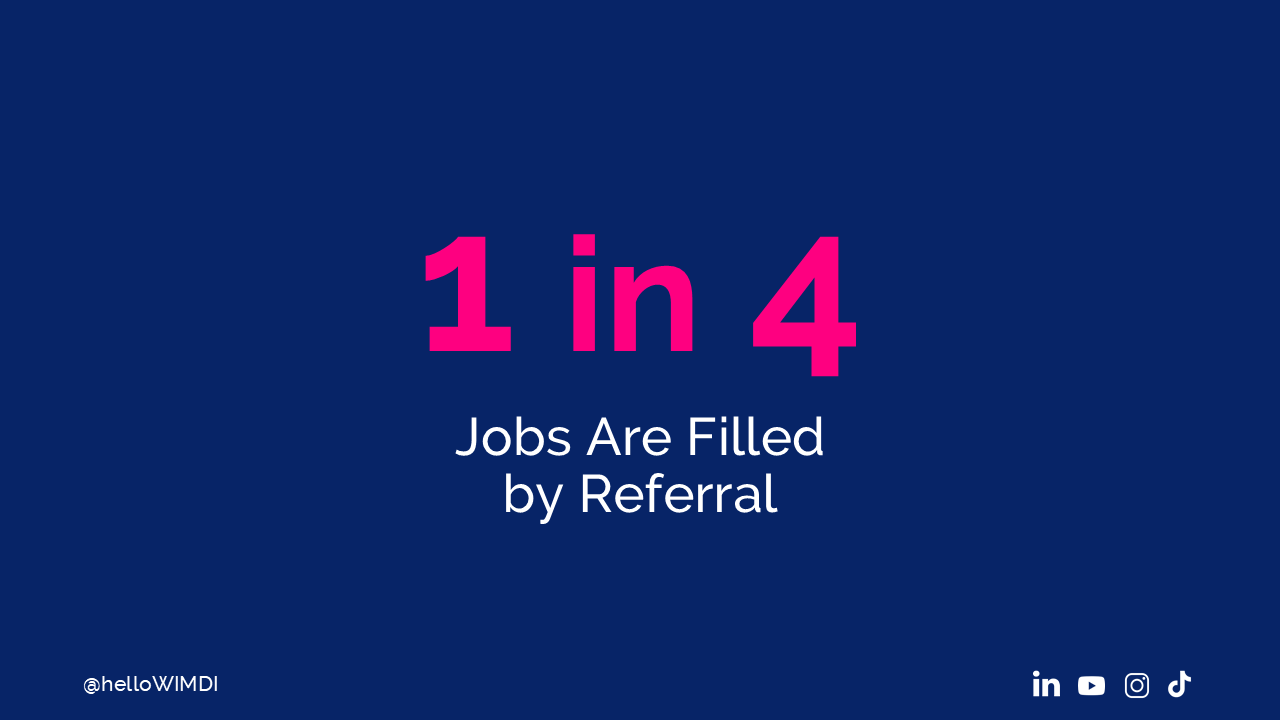
It really comes down to who we know, who our friends are, are we getting out there, are we making friends?
We're going to talk about how to be ourselves online. It can be really tricky, when we're networking in person, we can kind of see how everybody's doing it and kind of learn from that.
But everything's behind the scenes when we're online, so we don't often get that opportunity to see how other people are doing it.
So, we're going to talk about authenticity. We're going to address the elephant in the room, which is the discomfort, and we all might feel differently about that.
We're also going to talk through some scenarios tonight. Some of that includes examples of my own networking, some of which has gone really well and some of which has not gone so great.
Paige's Networking Example
I want to lay things out with a quick story. Kate was a senior VP based out of Toronto.
A couple years ago, I saw her giving a talk online and I thought,
"Oh my gosh, I want to be her. I want to be her friend. I want to know her."
"I want to message her, I want to message her."
I went home. I was very excited and I thought, "Why would she reply to me, like she's got a hundred people in her inbox, why would she reply to me?"
I remember thinking, "How am I going to stand out? How am I going to impress her?"
And eventually after hours of deliberation, I thought, "Okay, I'm just going to send the message. It's short, it's sweet, it's kind. We're going to send it."
What surprised me the most about this scenario was Kate not only replied, she replied within an hour and she actually already knew who I was.
She had seen me participate in another event as a panellist and she'd been meaning to reach out and just didn't have the time.
So, fast forward a few years later, Kate and I are actually still in touch, and whenever she flies to Vancouver, we end up grabbing lunch and kind of picking each other's brains on each other's projects.
It really just goes to show the importance of being able to shoot your shot and you never know who's already watching your work.
Why Does Online Networking Feel So Cringe?
Why does online networking feel so cringe? As I've mentioned, there's a lot of different feelings that we can have about this.
My goal with this exercise is we are going to walk through the different core fears or different feelings we might be having about it, the reframes we can take and the actions that we can use to apply to kind of walk ourselves through this and override this function.
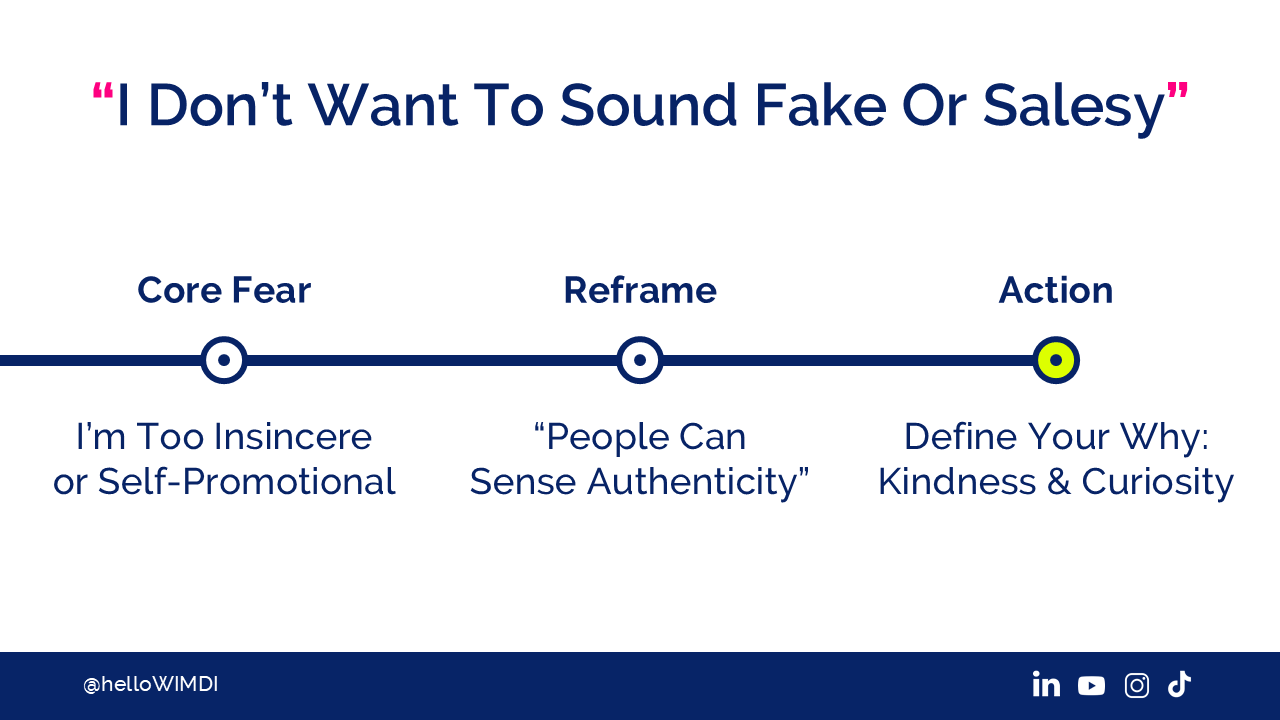
I Don't Want To Sound Fake Or Salesy – The Fear, The Reframe & The Action
The first one was, "I don't want to sound fake or salesy," and it might come from that fear of insincerity or being a little too self-promotional.
I know I've definitely worried about this before, especially on LinkedIn, when it's like, "I want to ask someone how they did something." But I'm also like, "Is this going to come across weird? Are they going to think I have a weird motive? I don't know what to do."
A possible reframe that I used for myself that might work for you is just that remembering people can sense our authenticity. If we're really being ourselves, we're really using words that we would use in a day-to-day, people can sense that.
If the goal is truly long-term relationships, people will find out with time, what was real and what wasn't. So, it's good just from the get-go to be ourselves as much as we can.
The action that I took to help build this reframe was to define my why. For example, when I look at my message and I think, "Okay, is my why clear enough in this? Is there kindness in this? Is there curiosity in this? How can I make this as clear as possible for someone to read?"
That was kind of what took me out of this area and helped me to feel a lot more confident when it came to my online networking.
What Do I Even Say? This Is Awkward - The Fear, The Reframe & The Action
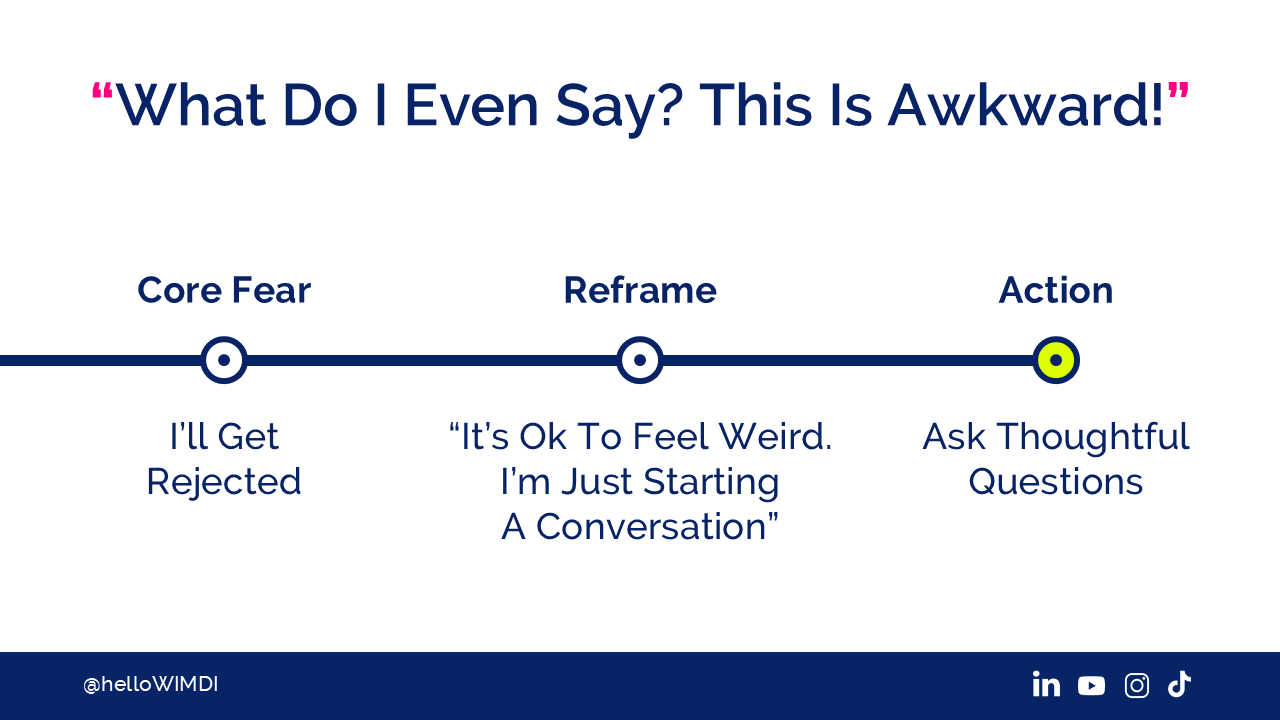
If for any of you that relate to this, "What do I even say? This is just awkward and I don't like it."
The core fear here is potentially one of rejection. If we reach out and they don't reply, how is that going to make me feel? Or what if they say something mean? Who knows?
A potential reframe for this is to really just acknowledge we're starting a conversation. It's okay to feel weird.
As long as we're being nice or being short and sweet, it's probably going to go all right. And remembering that when we're feeling that sense of, "Ugh, I don't want to get rejected, this is weird."
The action is to ask thoughtful questions. A great way to do it is like if you see someone post about AI and then you are wondering about it as well, or maybe you know something about that and you reach out to them and say, "Hey, I really liked your post about this and now I want to add to this."
Now it becomes a two-way conversation in terms of something that they've brought to the table. It can help ease that awkwardness and make things feel a little bit smoother.
I’m So Embarrassed To Be Doing This - The Fear, The Reframe & The Action
Another one to consider as well is that feeling of embarrassment. Like, "I don't want to be doing this. I would rather be doing literally anything else."
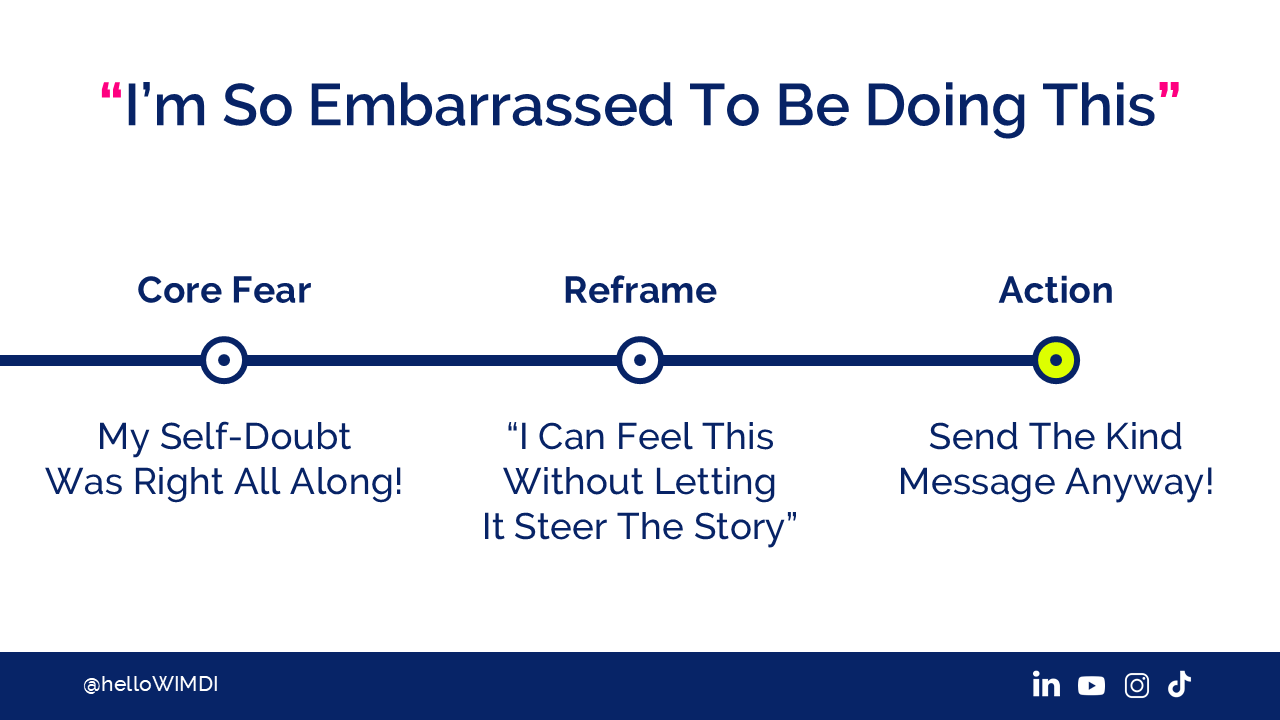
The core fear here was "My self-doubt was right all along."
When I was younger in my career, I was scared that I would be found out that maybe I didn't know as much as I thought I knew.
A reframe for this is to look at it from the sense of "I can feel this without letting it steer my story." And a lot of this reframe can apply to the other styles as well.
The action that would support this is just send the kind message anyway. In moments when I've been like, "Ooh, I don't know, I want to..."
When in doubt send it. Send it 'because you never know where you're going to end up from this. You never know who you're going to end up meeting.
There's definitely some messages I've sent in previous years that I'm like, "Wow, like I would've never known this person had I not done that.”
I Overthink Every Word & Don’t Hit Send - The Fear, The Reframe & The Action
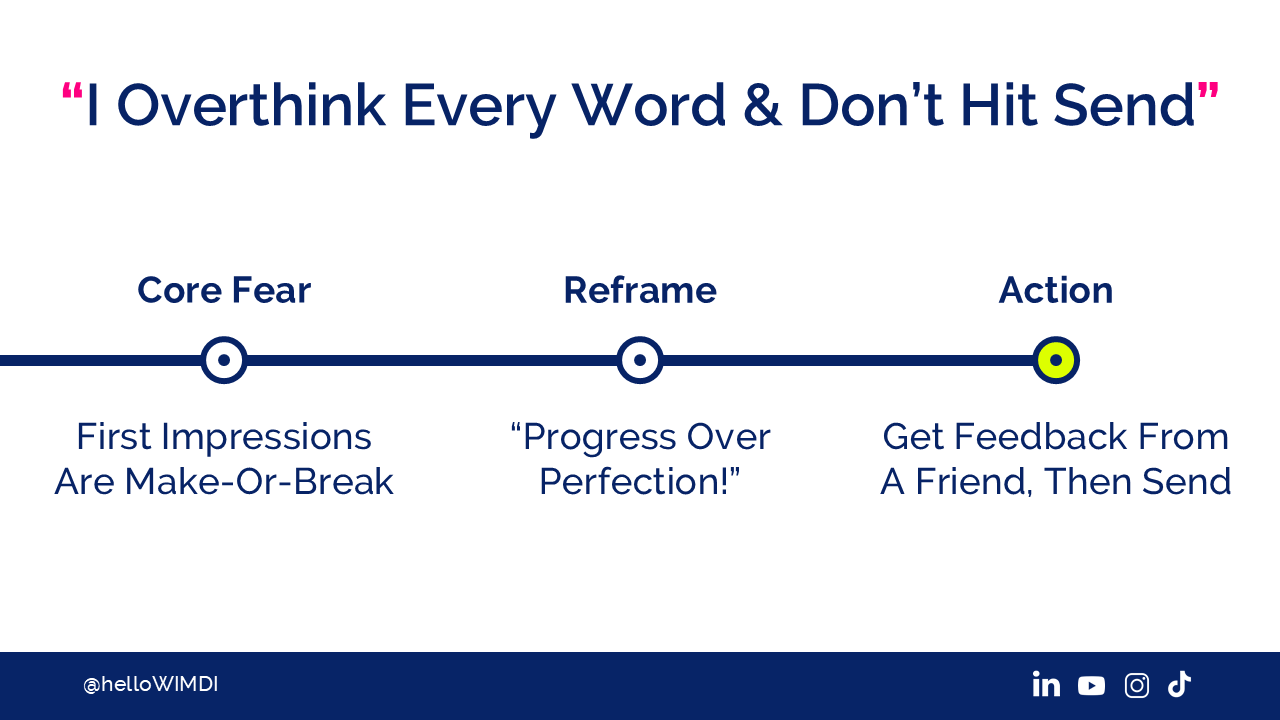
Another one to kind of think about here is "I overthink every word and I don't hit send."
I have a friend who relates to this one very much. The way she described the fear was "First impressions feel make-or-break." So, if she was feeling 10 out of 10 on fire, everything's great, she'll send the messages.
If she's feeling like a seven out of 10, she won't send it 'because she's nervous that she's going to come across a little different than how she would want to be perceived.
The thing about this though is it's rooted in perfection. And if we can reframe that thought when we're having it, to "Progress over perfection," if you send a message that's an eight out of 10, instead of waiting for the 10 out of 10 message, it's still a great message and you've probably still made an impact and you've still got an outcome.
An action that my friend took for a couple years was she would send me a draft of her email and I would approve it.
I would look at it, she'd ask, "Does this sound insane?" And I would say, "No, Jessica, it doesn't. Like, it sounds completely fine."
We did that back and forth until eventually Jessica became really comfortable sending the messages.
Why Would They Want to Hear From Me - The Fear, The Reframe & The Action
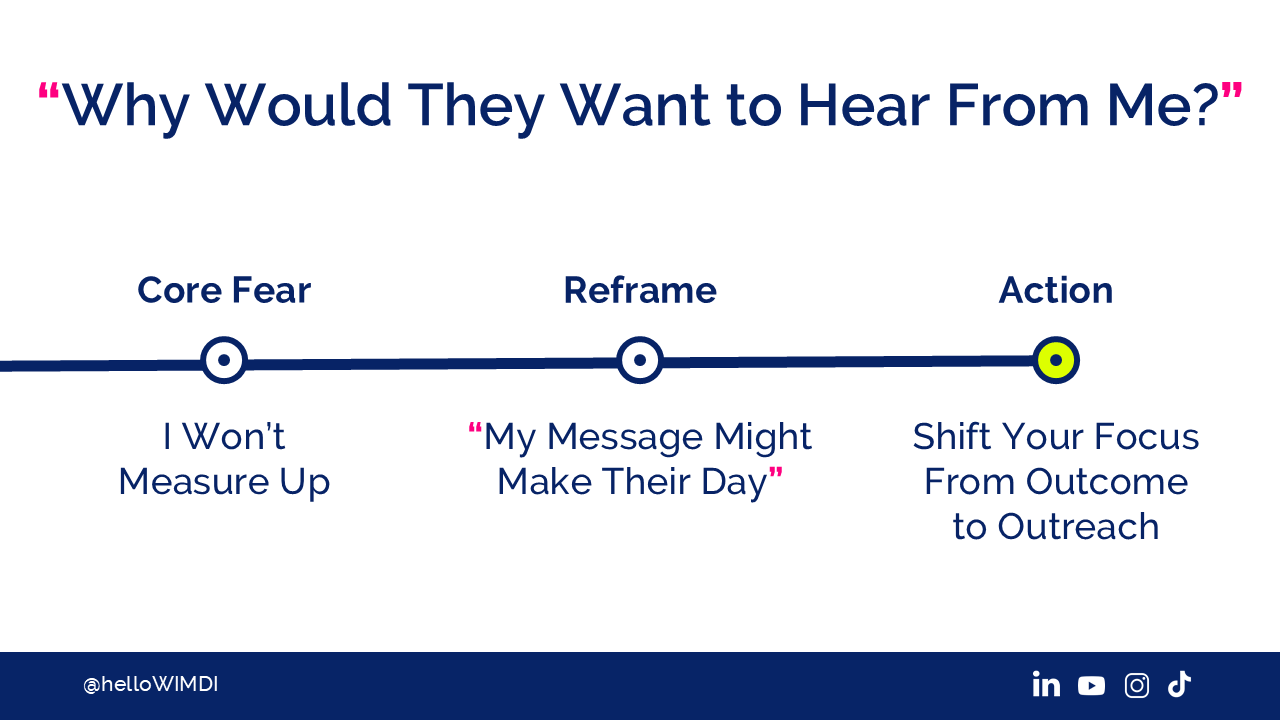
Another one that might apply to some of you in the room is "Why would they want to hear from me?"
This was how I felt with Kate where I was like, "I don't think so. Like I don't really know how she's going to react to this and I don't know how to differentiate myself to a hundred people in her inbox."
The core fear is "I won't measure up." And that would feel really crappy to learn that maybe I won't measure up and I won't get a response.
The reframe for this though is "My message might make their day" and it actually did make her day, we became great friends and we've had a long-term relationship on opposite sides of the country through all of this.
In terms of the action, it's shifting our focus away from outcome and towards outreach.
Another way to kind of think that through is like rather than being like "How many of our messages won, how many of our messages got that job? How many interviews did we get out of this?"
Think about, "How many did we send?" That's actually pretty impressive. If I send 100 messages and I get 10 really good quality responses back, that's still a win. So, it's reframing and taking actions that support that.
Preparing to Reach Out – Identify Your Goals, Potential Connections & Common Ground
How to prepare to reach out. We've walked through a little bit of different mindsets we might be in, or different ways that we're going to walk ourselves back from mentalities that may have held us back previously.
Now we're looking at actually going to send a message and I will say, when I've talked my mentees through this, a lot of them are say, "You just do it. Like you just send the message and you do it and you do it and it's out."
I think, "Okay, slow down. Like we don't have to go that fast. This is not the highway."
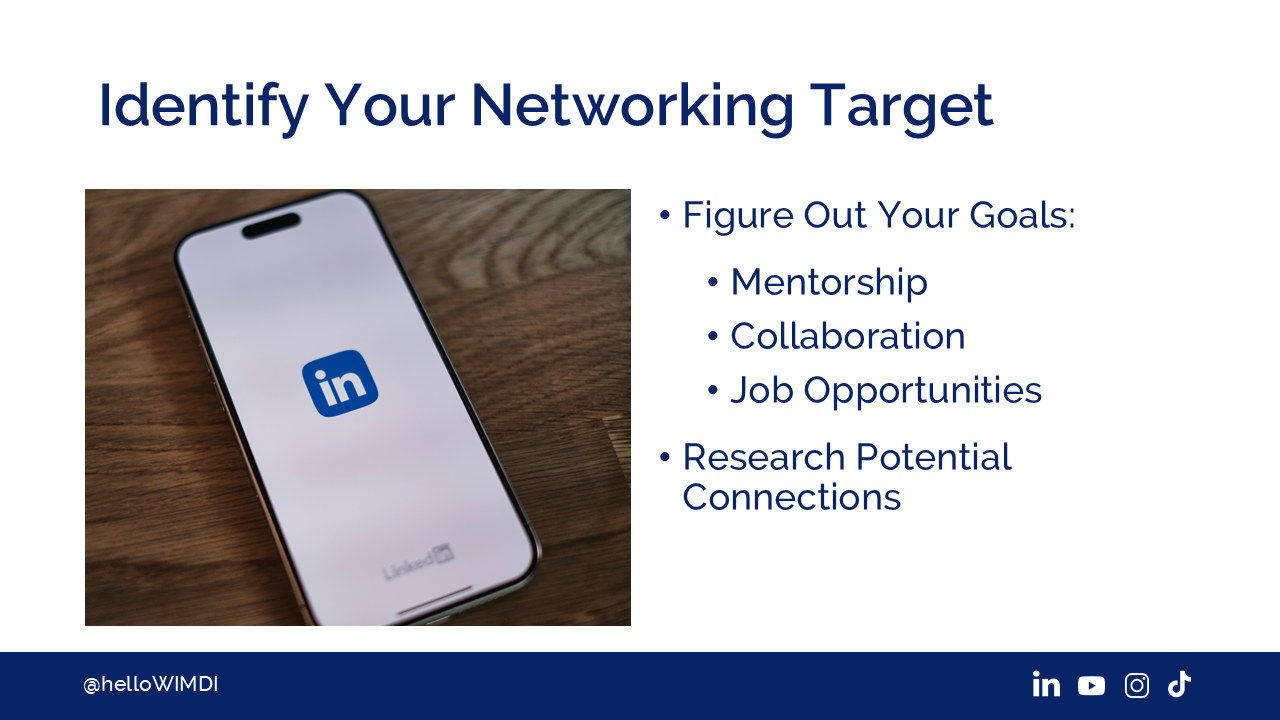
I would recommend, if you have someone that you were really looking to reach out to, do a little bit of research beforehand. Figure out our goals of what we want to accomplish with this message.
Are we seeking a mentor? Are we seeking a new client? Are we looking for a new job? Are we looking to partner with somebody on an event going forward?
I've gotten a lot of messages in my inbox where I think, "This is great. I love people. but I have no idea what this person wants from me."
So, if we establish this right out the gate, we're also more likely to get a response back from the person that we're wanting to reach out to.
Same goes for potential connections as well. Have you worked at the same company a couple years previous or have been part of certain organisations? That can also be a really helpful thing when it comes to building the actual outreach message.
Find common ground. So, Google them, not in a way of, “we know where you live”, but find out where they went to school, did they go to the same university?
Did they do hobbies that align with your hobbies? You both play softball. That's great, align on that.
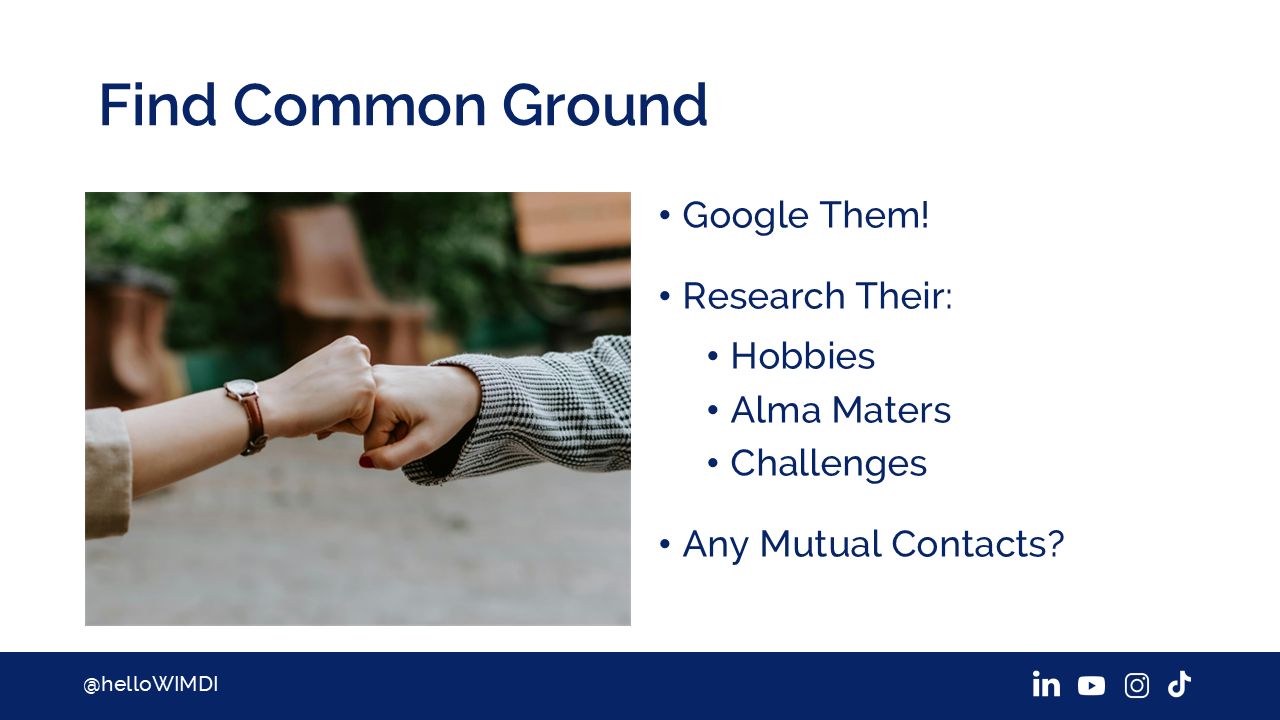
One that I've seen quite a bit with LinkedIn, is when somebody's posting about a challenge they’re having. If I know something about that challenge, I hop right on that, it's not a tactic, it's just I want to help.
There's times where like I want to learn too. So, when somebody's opening the door to learn something and I have that knowledge, I'd love to share it. That's often a way that I've been able to build long-term relationships.
Mutual contacts are also a big one. Again, the referrals are one in four. Anytime you can find somebody on LinkedIn that you have that common contact, ask that person to introduce you is always a big win.
Almost all of my clients until last month have been by referral. I've just started getting into outreach and pitching.
I think it just goes to show that anytime we can find somebody that maybe we used to work with at a previous company, and they know David and we want to get in touch with David, that's how that begins and often how it can be very successful.
Focus On Giving Value
This flows into that thought process we just walked through, what can I give to this person? If I'm in a situation where, you know, it's either a very different level of expertise or one person's more experienced than the other, I like to recommend sharing something helpful.
We all have something that we can bring to the table in some way. So, when I say, "Share something helpful," like resources.
A couple weeks ago was somebody was trying to learn about governance and. I had just been listening to a podcast episode that was talking about board governance.
I sent it to them and said, "Hey, I saw your post, thought you might want to listen to this." That started the dialogue in a really natural way.
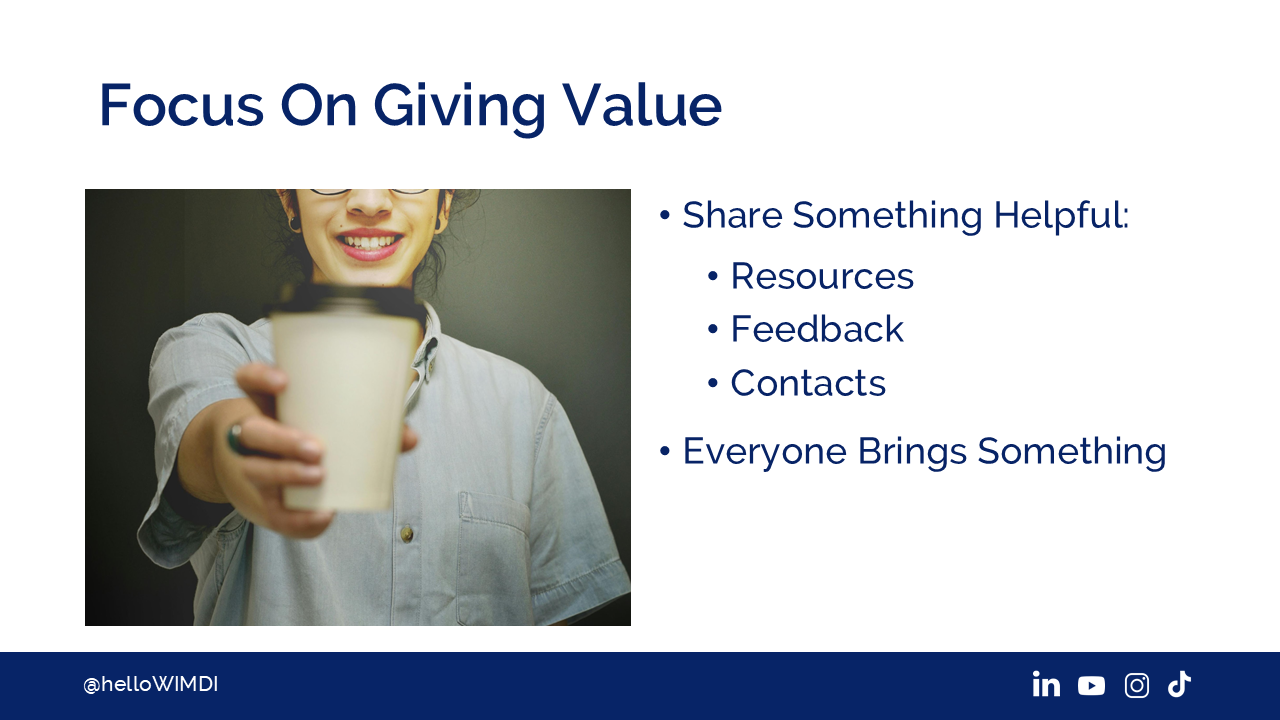
Giving feedback is also a really helpful way to do it.
I follow a lot of email newsletters. One of them that I was reading, had a bunch of typos and formatting errors. So, I screenshot it, sent it over and just said, "Hey, heads up, I noticed this, I'd want to know if it was mine. So here you go."
We ended up building a partnership out of that. It was me trying to help, but that opened the door to that conversation.
We've now referenced a few times, contacts. If someone's looking for a graphic designer, and you know a graphic designer, get them in there.
If you are able to be a referral for someone, that's a big deal, you're helping someone get to where they need to go and establishing your network even further.
Everybody brings something, whether it's two years of experience, 20 years of experience, everybody brings a unique perspective. That's something that I often remind my mentees when we're talking about this.
Be Authentic
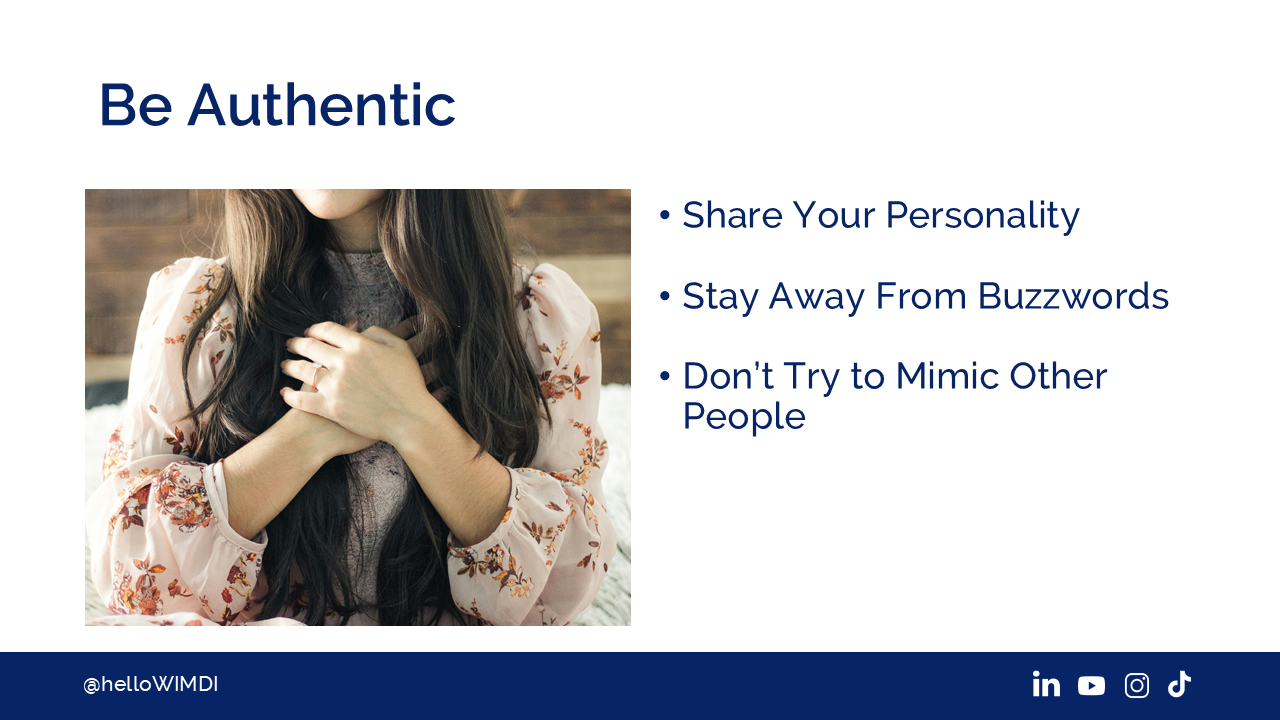
Authenticity. So, sharing your personality, I know that sounds so like, "Oh, share your personality," but I really do mean it.
Especially when we're in professional settings, there's this desire to mask or put the personal stuff over here, and it's only professional from here on in.
I'm very open with my hobbies, my interests, my obligations, my family life with my clients. I know all the names of the kids of my clients; I have met most of them.
Being able to kind of share these parts of our personality and our life really helps to deepen that sense of long-term relationship.
Stay away from buzzwords is also a big one. And this is one that I needed to hear probably 10 years ago.
I learned all these corporate acronyms and jargon, and I was so eager to use them and we will talk more about that in a little bit.
Don't try to mimic other people. It's one thing to channel the inner Beyonce and it's entirely another to take on this entire facade that isn't you.
I've definitely seen this before with friends who invented this character, but the longer you stay at a company or the longer you deepen a relationship that façade eventually comes down.
Reinforcing that authenticity and we're really trying to be ourselves in every way that we can.
A Basic Script You Can Use For Networking Outreach
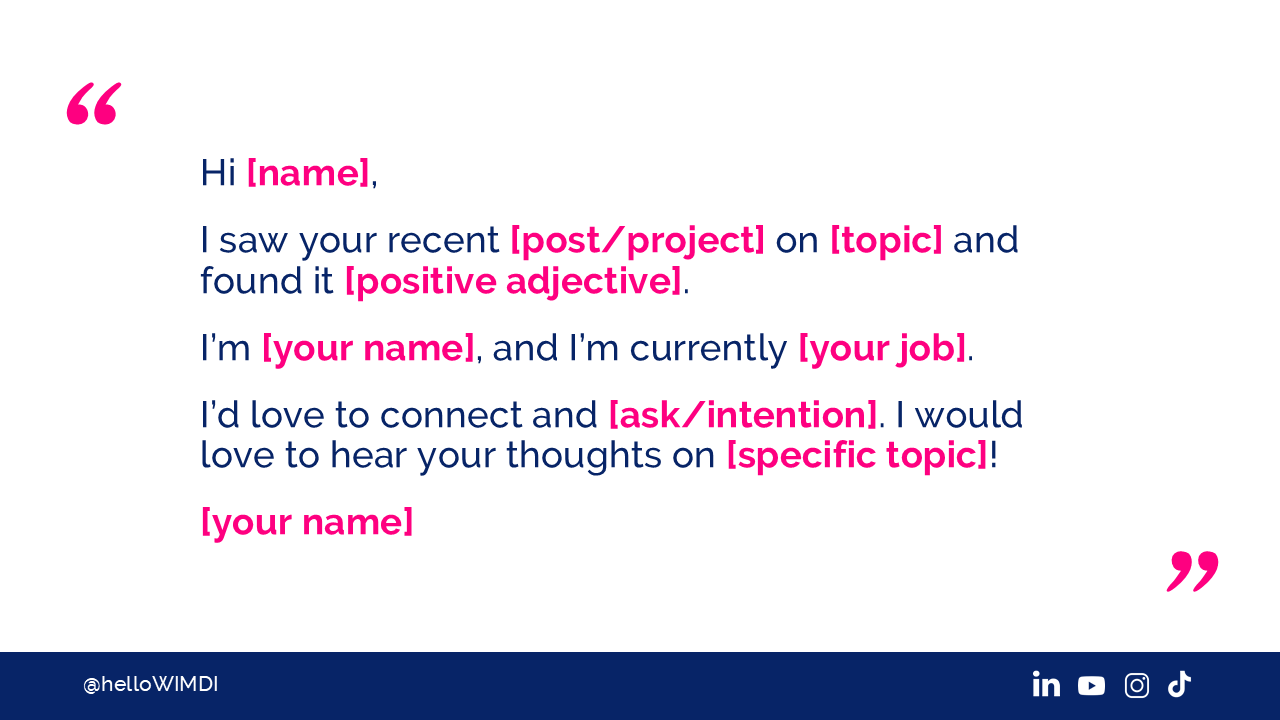
Before we dive in, this is the bare, bare basics. This is something that I use on an ongoing basis that works quite well for me. You're welcome to customise it wherever you'd like as well.
I'm just going to start this out with the way I would've written this. So, I might say,
"Hi Brenda. I saw your recent post about the Disney World Project that's coming out in Vancouver and I found it really insightful and engaging.
I'm Paige, I currently run Strand and Strategy Communications. I'd love to connect and just kind of hear what you're hearing about this, get a little bit more information on this project.
I've heard that it's super interesting and it's going to bring a lot of tourism focus to Vancouver. Love to hear your thoughts on this."
This is intended to be as simple as possible. You can insert whatever you'd like in it and it's something that I just find engaging, short, to the point and also having that ask and intention is really important.
“I'd love to connect and get your thoughts. What does that look like for next week for you? Or do you have space in the coming weeks?
We can talk about this.
To allude back to an earlier slide, it's that curiosity. I've seen something that they've done, I'm following up on it, I'm asking about it and I'm also potentially going to help her through it.
If I can't help, I'm going to get one of my friends to help and one in four referral, boom.
If I were to rework this because I don't know anything about this person at all, I would probably say something to the effect of,
"Hey, I see that you run this company, I really appreciate how your company does X and Y. I really admire that and I really like working with clients that have that.
I'm Paige, I run Strand and Strategy Communications. I'd love to connect and get to know what your needs might be. If you have any storytelling, communications projects coming up that I could help you with.
Would love to hear your thoughts on how things are going."
So that's kind of how I would reinvent that if I don't know them. I think even when we're given little morsels of information, we can still use it in a way that's thoughtful, engaging, short and sweet.
Real Examples Networking Outreach Emails That Work
Examples of outreach that worked for me and then there's a bonus at the end of one that did not work for me and it's embarrassing, but I survived.
Outreach that has worked for me. This is going to Joy.
"Coffee soon?
Hi Joy, thanks for inviting me to connect with you. I was really struck by your credentials, and I feel like we have quite a bit in common.
Do you have space for virtual coffee in the coming weeks?
Chat soon. Paige."
I send this kind of message often and I see results from it. This isn’t coming on too strong. It's very clear in what we're after. If I were to quantify it, I'd say like eight out of 10 times this works.
"Let's Collaborate?
Hi Jane, I've been following along with your company's journey for the last while through your email newsletter and I keep finding myself in awe and wanting to participate.
Between the emphasis on purpose-driven organisations and strong female leadership, I see a lot of alignment."
These are the things that I really like about the company. This is the fact that I have been a newsletter reader of theirs for a long time. And I wouldn't just say that, I genuinely follow their newsletter, I've been following their company, I like what they're doing and now I'm reaching out.
To the ask, and this one's interesting here too,
"Do you ever work with contractors? Regardless, I'd love to get to know you better."
The sweet spot here that really got me a client was "Do you ever work with contractors?" One sentence. So, the reality, no, Jane never worked with contractors. "Regardless, I'd love to get to know you better." She liked this.
We had coffee and I was her first contractor, and I was able to help their company.
Another thing with email newsletters, it's also a great way to just slowly have them on your radar. You're hearing about how the company's doing, you're getting all of the special tidbits. So, if you're looking for clients, that's a great way to approach.
I wouldn't use this one all the time. This is very much like a case-by-case, I genuinely read the information kind of situation.
"Hi Kate, lovely to meet you.
Just wanted to send a quick thank you for sharing your thesis about youth independence in Canada. I read through it this afternoon and it really resonated with me."
I really did read it. I really did. Do not fake that you read someone's thesis, it will not end up well.
"I walk children to school daily through the City's Walking School Bus programme, and have definitely noticed the confidence it's given a lot of the kids. Your mention of physical activity in building confidence particularly stood out as it aligns with some patterns I've observed.
This helps me better understand these dynamics and I actually really appreciate it. Do you have time for a 30 minute call in the next two weeks to discuss?"
So super niche, she posted, I really was interested, I really read it. If it was something I wasn't interested in and I didn't read it, I wouldn't send this.
This is definitely something where you really feel that alignment, you really want to build that relationship.
One Hilariously Cringey Networking Outreach Email That Didn’t Work
I know what you're thinking. That is easy for me to say, "Oh we can just online network and it's all fine." I know, but I wasn't always that confident with this. And I'm going to show you this really bad email that I sent. Already feeling cringe about it.
"Coffee soon?" This was LinkedIn and she never replied.
"Dear Sharon, I trust this message finds you in good health and high spirits.
I'm reaching out to proactively establish a strategic professional rapport, given your esteemed expertise in the hospitality industry."
Like, ugh.
"Your thought leadership at your company has not gone unnoticed and I believe there's significant potential for cross collaborative value alignment."
What does that even mean? What tangibly is that? We don't know. And it got worse.
"For cross collaborative value alignment between our respective professional spheres."
Is that their companies? Is that my company? Who even knows?
"As a director at your company, I'm keen to explore avenues for potential knowledge exchange."
Eww! Eww.
"And synergistic engagement."
Again, what are we asking for? Is this mentoring, is this a job? We don't know.
"I would greatly appreciate the opportunity to schedule a mutually convenient time to discuss possible intersections of interest that could lead to scalable outcomes."
Pretty bad. Not my best moment. My hope is that Sharon never saw that. Sharon had busier fish to fry and didn't see it. That's my hope.
But that said, that was 10 years ago. I'm alive, I'm doing pretty good, I'm okay, I'm here.
When we are networking and we have those moments of, "Oh crap, why did I say that? Why did I send this?" We're all going to make it through, it's probably okay, but as long as we're sticking to kindness, curiosity, short and sweet, that's I think the big takeaway.
A Last Online Networking Tip – Follow Up!
One last online networking tip, following up. We often hear when we've had a meeting, "Follow up. Follow up after the meeting, follow up, follow up, follow up."
Following up is also an important tactic or method when it comes to someone that we haven't even met yet.
I just signed a new client this week, we were in touch in September. I had slid into the DMs and she messaged, "That sounds great, like I'd love to do this."
Then she just ghosted and didn't come back for weeks. I remember thinking, "Oh okay, like I guess maybe not."
I kept checking and I was like, "Hey, just you know, checking in. Is this something that you'd like to do or I can direct you to somebody else?" Just really trying to be short, sweet, polite. And now we're working together.
It took quite a few months to come together, but when we did our onboarding, she'd mentioned, "Thank you for being persistent, following up. It just kept falling off of my plate."
That's just something to keep in mind, even if we've nurtured a relationship that's fully online, we can still have those follow ups too.
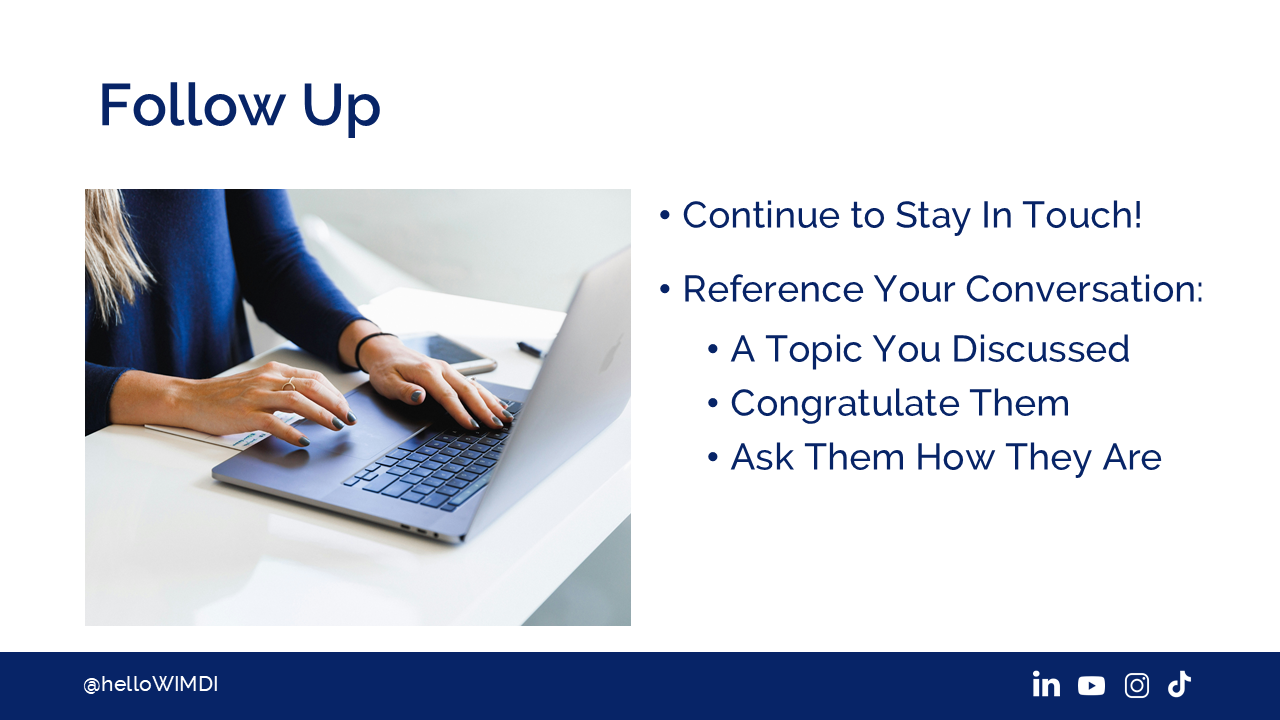
The other thing that I like to do too, because people are busy, is reference conversations. An example would be, a prospect told me about a cake shop over on Main, the favourite cakes that they get from that place, and what they love about it.
I ended up getting one from my mum's birthday and I wrote them a note back and said, "Hey, I really like that place. I got this one. Have you tried it?" And then we keep going from there. So, referencing something they've already said is a great way to keep the conversation going.
Another easy way to stay in touch is to congratulate people. So, new jobs, they've moved, anything that you've seen kind of pop up online, being able to just say, "Hey, this is a win, let's celebrate it."
This talk was actually like a few years in the making. Holly and I have of course known each other since 2018.
I think we were talking about me doing a talk in 2022 and then for various reasons it didn't end up working out.
Holly reminded me of this a couple weeks ago and this was a message I sent to her this year that followed up from that 2022 conversation and brought back so that we're doing this talk today.
And I read this and I was also, "Oh my gosh, I can't believe I wrote this."
But that's the other thing I will say. When you know someone, like for years, it's also very different than when you, you know, like how I would've said it if we just met may have been different.
- [Holly] Paige feels like this is a cringey email. This is one of my favourite emails and when you see what's in it, I'll later tell you, me and my assistant's nickname for Paige for like a good six months after.
Paige - I'm pretty sure this was influenced by cough medicine, but we'll see.
"Hey Holly, I hope you're staying dry this week. Whether that be away from the rain or the influx of coughing and sneezing that has returned to the streets."
Can confirm, as my nephew coughed directly into my mouth this week, otherwise known as the toddler power move and I've since acquired a cold. Anyways, WIMDI talks!
I've heard some FAQ patterns with my mentees recently around how to pursue networking online in ways that feel sociable, friendly, and less cringe.
As I've now seen this pop up in four different mentee conversations this week, I want to gauge if this would feel well suited for the WIMDI audience.
If so, I'd love to revisit a WIMDI speaker session with you for 2025 and walk you through my rationale and my points.
Virus-ridden but committed."
That was the part where I think this is definitely influenced by medication. But Holly jumps in there immediately.
"Hey Paige, that idea sounds great! Let's get it organised and get you on the WIMDI stage next year."
Boom. Amazing.
- [Holly] From that point forward,it was the woman who's toddler coughed into her mouth. Between me and Angela, every time we couldn't remember your name, it was like, "Oh was that woman that got coughed on? We'd get her on the calendar soon."
So that came up and that led us to today. So very weird roundabout way to get there, but we did.
3 Key Takeaways For Online Networking
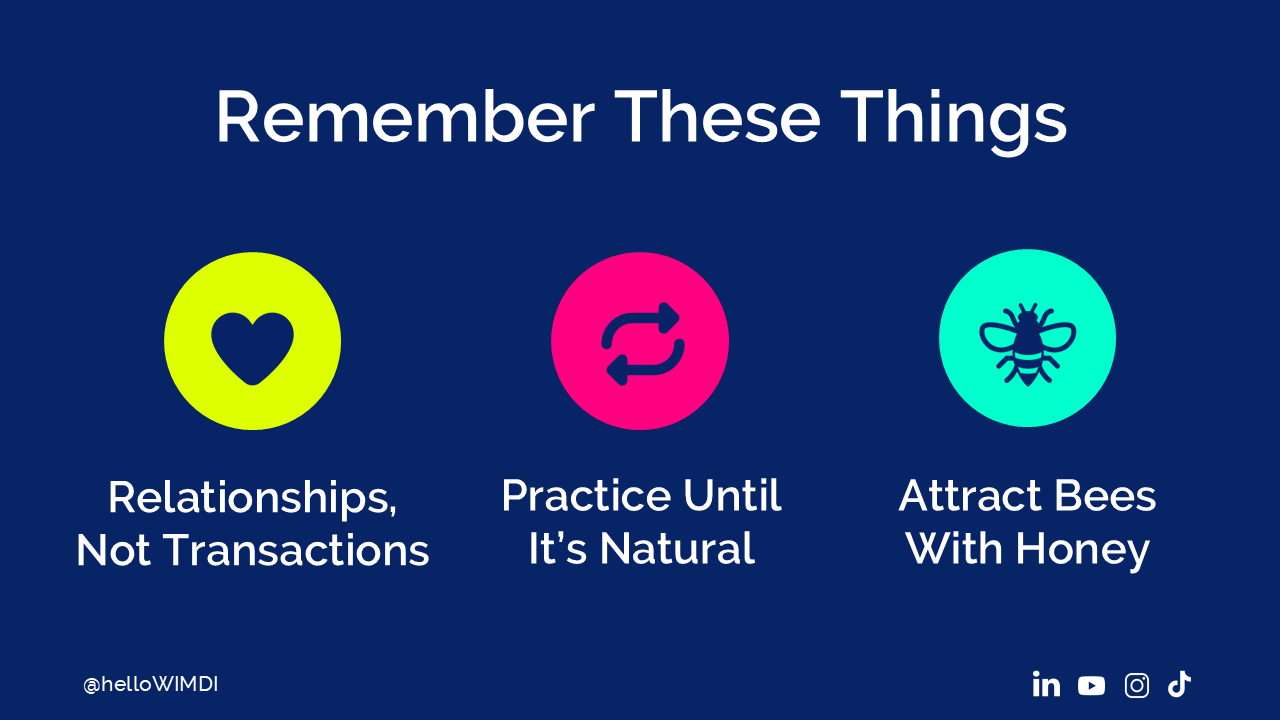
We're trying to build relationships. We're not trying to use tactics to trick someone into giving us a project or something. We're not trying to make it transactional.
We're really trying to build long-term relationships that work across multiple different connections.
We're also practising until it's natural. As we talked about, you know, trial and error, just try on a few different things that feel authentic to you and feel good.
And if you're not sure, involve a friend and see what they have to say about it as well.
Lastly, and this is a really big one, attract bees with honey. When you're sending something and you're not sure, if there's kindness involved, there's a likelihood you're making someone's day.
If it's not the right fit or that person doesn't have time for you, that's another story and that's for them to figure out. But if you're ever unsure or nervous about sending something, if you can guarantee that it's kind, you're going to be okay.
Your Practice Networking Homework
All right, so homework. We are encouraging you to reach out to one new person this week by email or by LinkedIn. You could do it today, you could do it tomorrow, you could do it through the weekend.
The goal is really just building those bases, getting more comfortable with online networking, reaching out, seeing that it's going okay, then feeling good about it so that we can keep going.
Before we really end, I also just want to leave you with like a last thought and it kind of connects a little bit to the butterfly effect where like, if you can just imagine for a moment, your different experiences right now, your lifestyles, your work, where you're going, what your goals are.
Imagine you go home and you send a message tonight and that leads you to a job interview next week.
Or you reach out to someone next week and they introduce you to your future business partner.
Or imagine five years from now you're looking back on this night and you're thinking, "Wow, I went home, I sent a message and now I have this beautiful scenic corner office."
Everything always leads to something else. The energy we're putting out is often connecting and just building outwards. But I believe that we all can do it.
I know we all have different varying levels of comfort with this, but I really think that this can come together and we can hit our goals in various ways through the networks and connections that we have.
If anybody wants to stay in touch, which I love reach outs, I love connecting with people, you can reach me at my email here at paige@strandandstrategy.ca
You can visit my website, but a better way to connect with me is probably by LinkedIn.
More Fun Stuff!
If you loved reading this transcript, you might like to watch the video or learn more about our amazing speaker! Check it out: